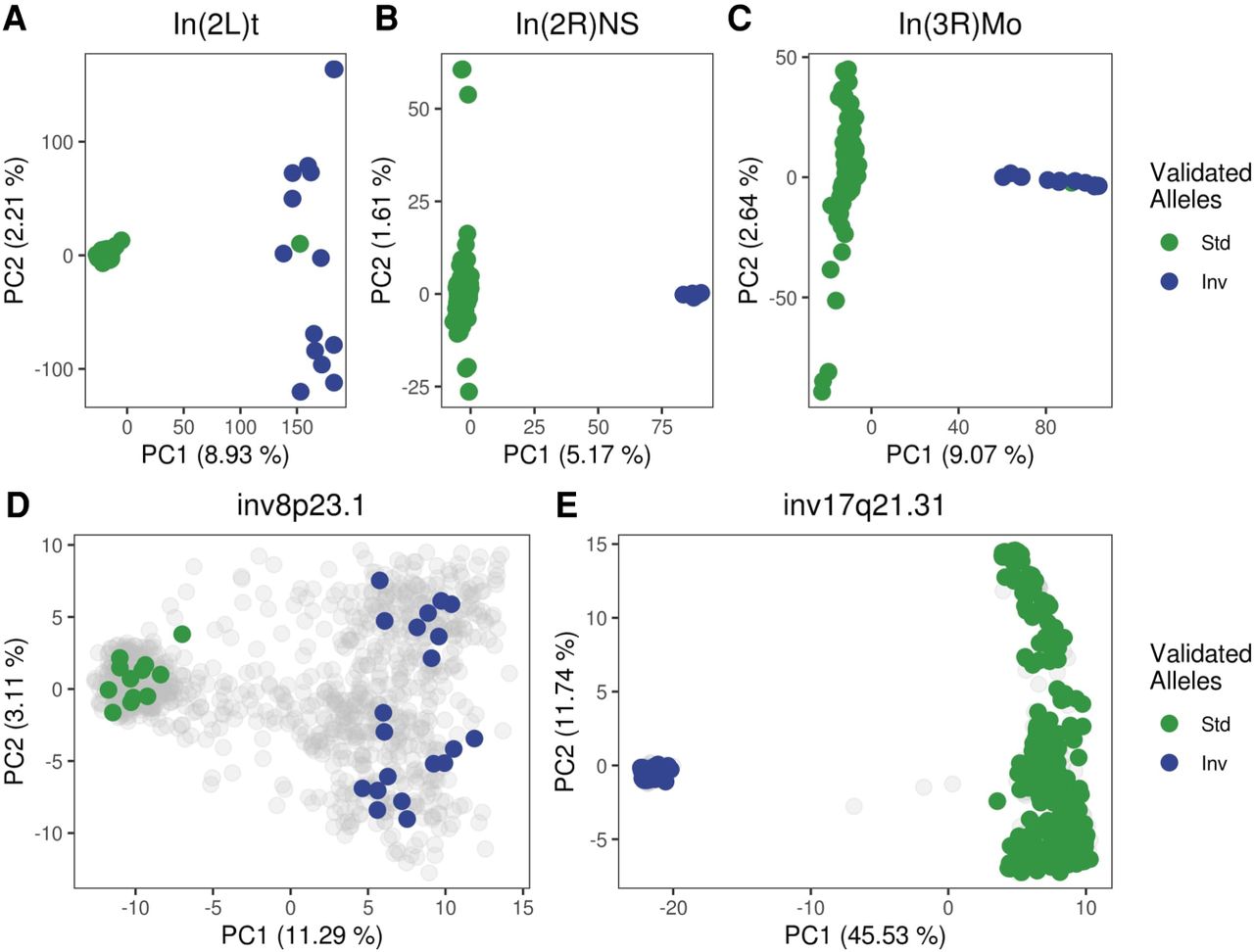
PCAs of recombClust probabilities for chromosomal inversions in Drosophila melanogaster and human. First two principal components of chromosomes, derived from the recombination classification at multiple recombination points along different inverted regions. Each point is a chromosome. Clusters mapping the inversion status in both Drosophila and human inversions are observed. Chromosomes with known inversion genotypes are colored (green: standard, blue: inverted). (A–C) Drosophila inversions in DGRP lines. (D,E) Human inversions in the European individuals of The 1000 Genomes Project. Gray points represent chromosomes either from individuals without experimentally defined inversion status or heterozygous individuals for the inversion.