


Figure 6.
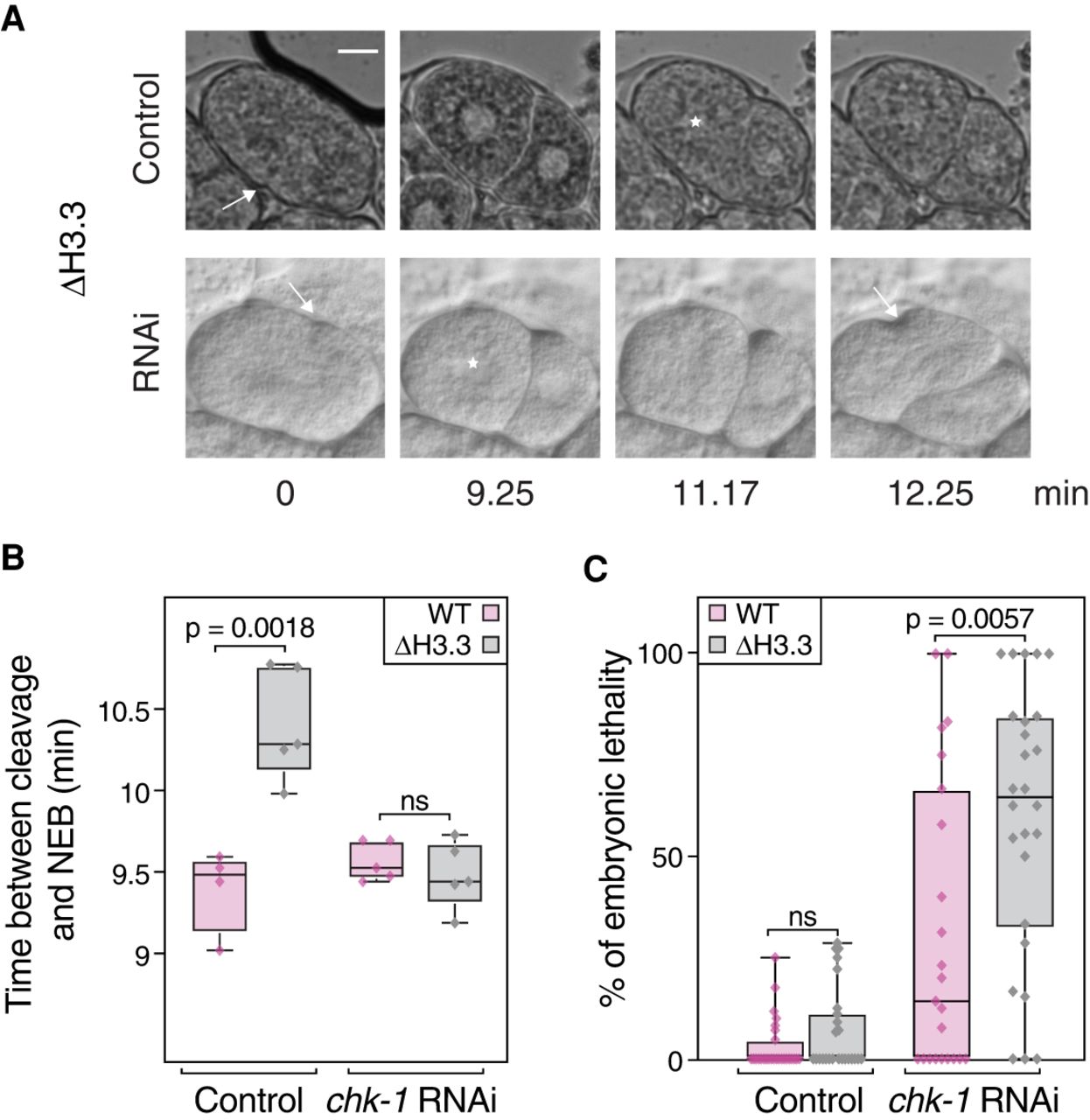
Loss of H3.3 results in cell cycle delays and replication checkpoint activation. (A) Determination of cell cycle length from the onset of the cleavage furrow of the first cell division (arrow) to nuclear envelope breakdown of the AB cell (star). Representative still images from a movie of a developing H3.3-null mutant (Δ H3.3) embryo with and without depletion of chk-1 by RNAi are shown. Scale bar represents 10 µm. (B) Cell cycle timing for WT and Δ H3.3 worms, with and without depletion of chk-1 by RNAi. (C) Embryonic lethality for WT and Δ H3.3, with and without depletion of chk-1 by RNAi. Significance was tested using unpaired t-tests.



