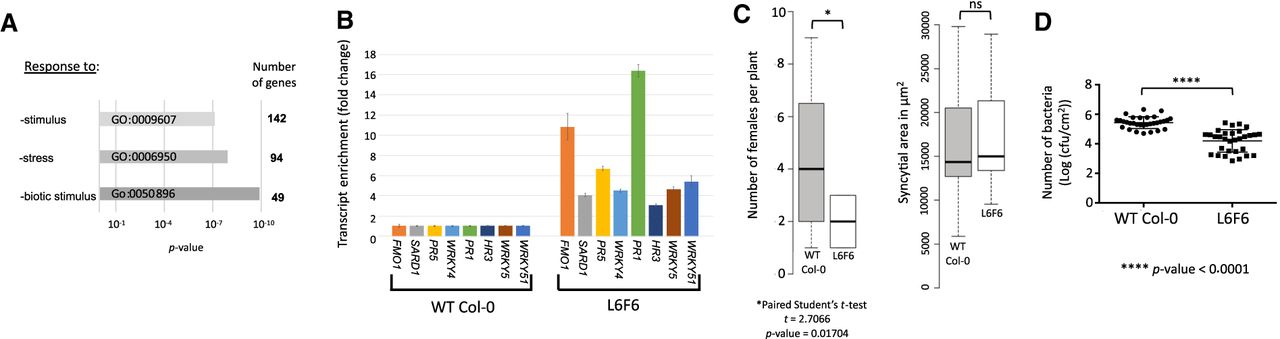
Biotic stress genes are overexpressed in L6F6, which is more resistant to nematode and bacterial pathogens. (A) GO term enriched in the pool of up-regulated genes identified in 20rDNA L6F6. (B) Histogram displaying the relative transcript enrichment for eight genes implicated in the biotic stress response using quantitative RT-PCR in WT Col-0 versus 20rDNA L6F6. (C) Wild-type (WT) Col-0 and 20rDNA L6F7 were inoculated with the sugar beet cyst nematode (Heterodera schachtii). Four weeks after inoculation, the number of adult females per plant was determined. Data are the average number of adult females ± SE (n = 35 × 3). Data from the three independent experiments were pooled and are shown (left). The relative size of the syncytium cells was measured between both lines but no significant changes were noticed (right). (D) Wild-type (WT) Col-0 and 20rDNA L6F7 were inoculated with Pseudomonas strain DC3000 at 5 × 10⁷ cfu/mL. Relative bacterial growth was determined 3 d after infection and is shown on the plot.