


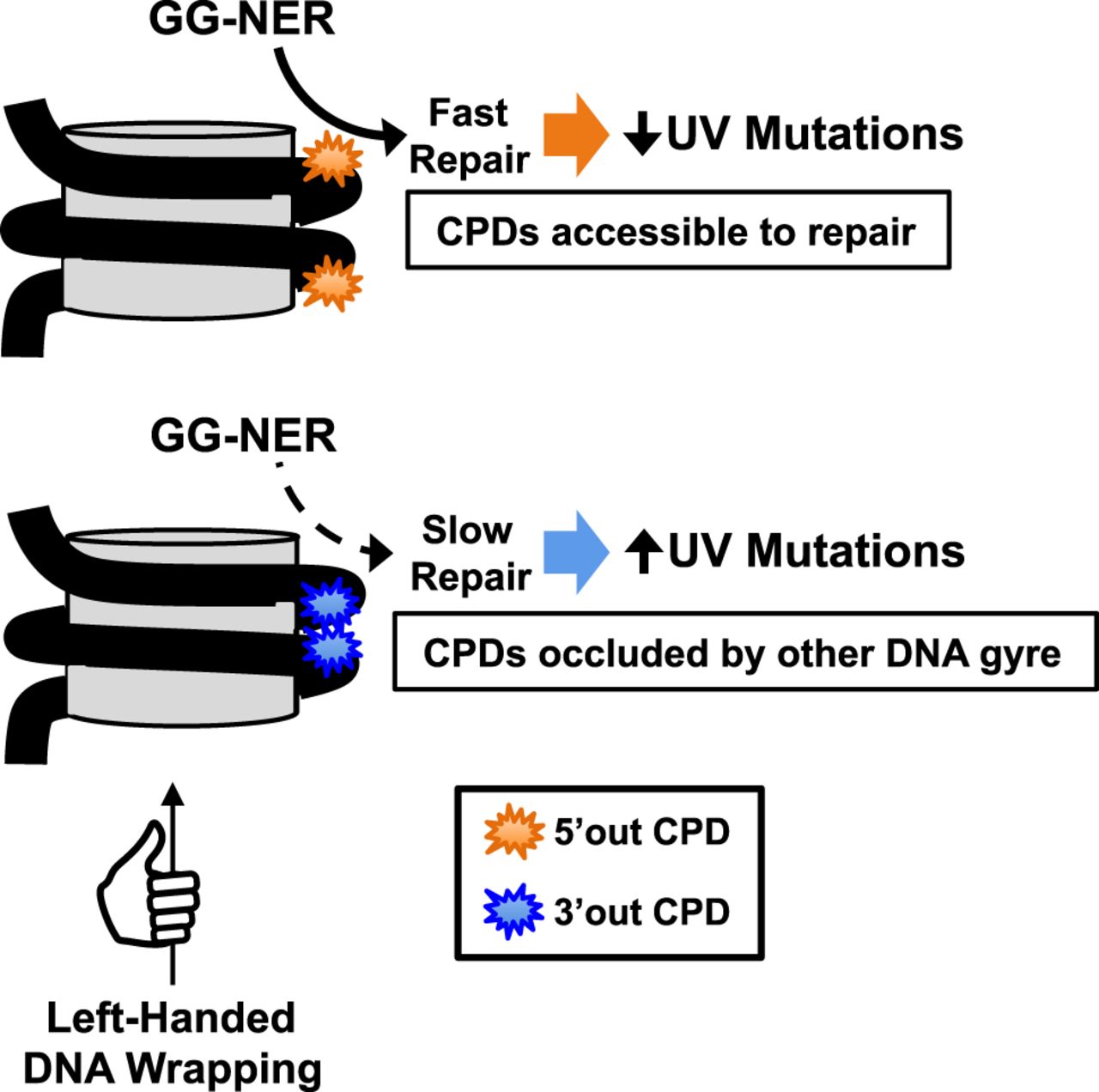
Molecular mechanism promoting asymmetric repair and mutagenesis in nucleosomes. Schematic showing how the left-handed wrapping of DNA (black line, depicting antiparallel DNA double helix) around the histone octamer (gray cylinder) promotes the accessibility and repair of CPD lesions on the 5′ side of the nucleosome dyad (orange), particularly at “out” rotational settings, but inhibits the repair of CPD lesions at “out” positions on the 3′ side of the nucleosome dyad (blue), because of the proximity of the neighboring DNA gyre. Two CPD lesions are shown in each nucleosome to highlight the asymmetry in solvent accessibility of the 5′ and 3′ sides of the nucleosome; however, typically only a single CPD lesion will be resident in an individual nucleosome.



