


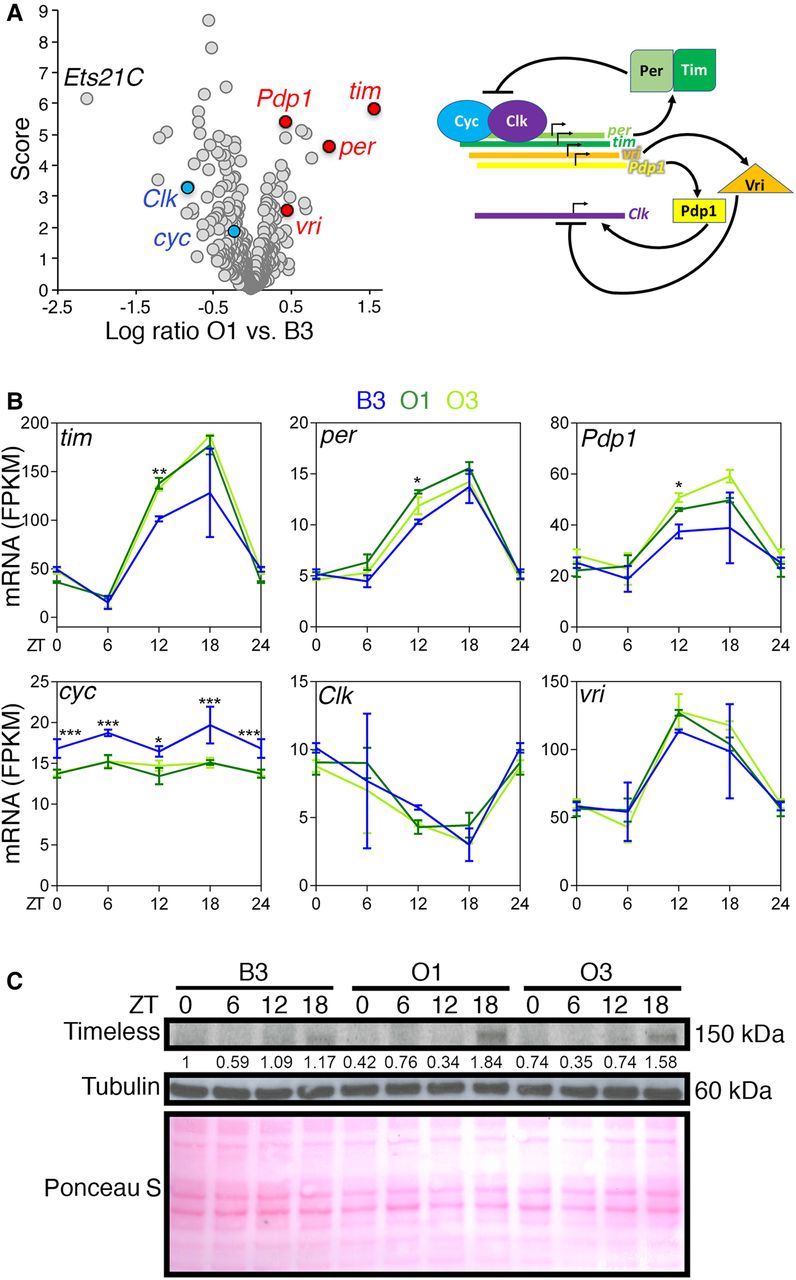
Core components of the circadian clock are differentially expressed in the skeletal muscle of long-lived O lines. (A) Differential expression of transcription factors and transcriptional regulators in the skeletal muscle of O1 versus B3. The x-axis shows the log ratio of gene expression changes, whereas the y-axis indicates the significance score, which is equivalent to the −log10(P-value). Ets21C has low expression in O1 compared with B3. Core components of the circadian clock are the transcription factors that are most highly regulated. (B) Expression profile of circadian clock components at different time points in the day (zeitgeber ZT 0, 6, 12, 18, 24). In the O lines, there is increased expression of timeless (tim), period (per), and PAR-domain protein 1 (Pdp1) at ZT12. Conversely, cycle (cyc) expression is reduced at all time points in O lines. n = 3, SD, (*) P < 0.05, (**) P < 0.01, (***) P < 0.001. (C) O lines have higher Timeless protein levels at ZT18 compared to B3.



