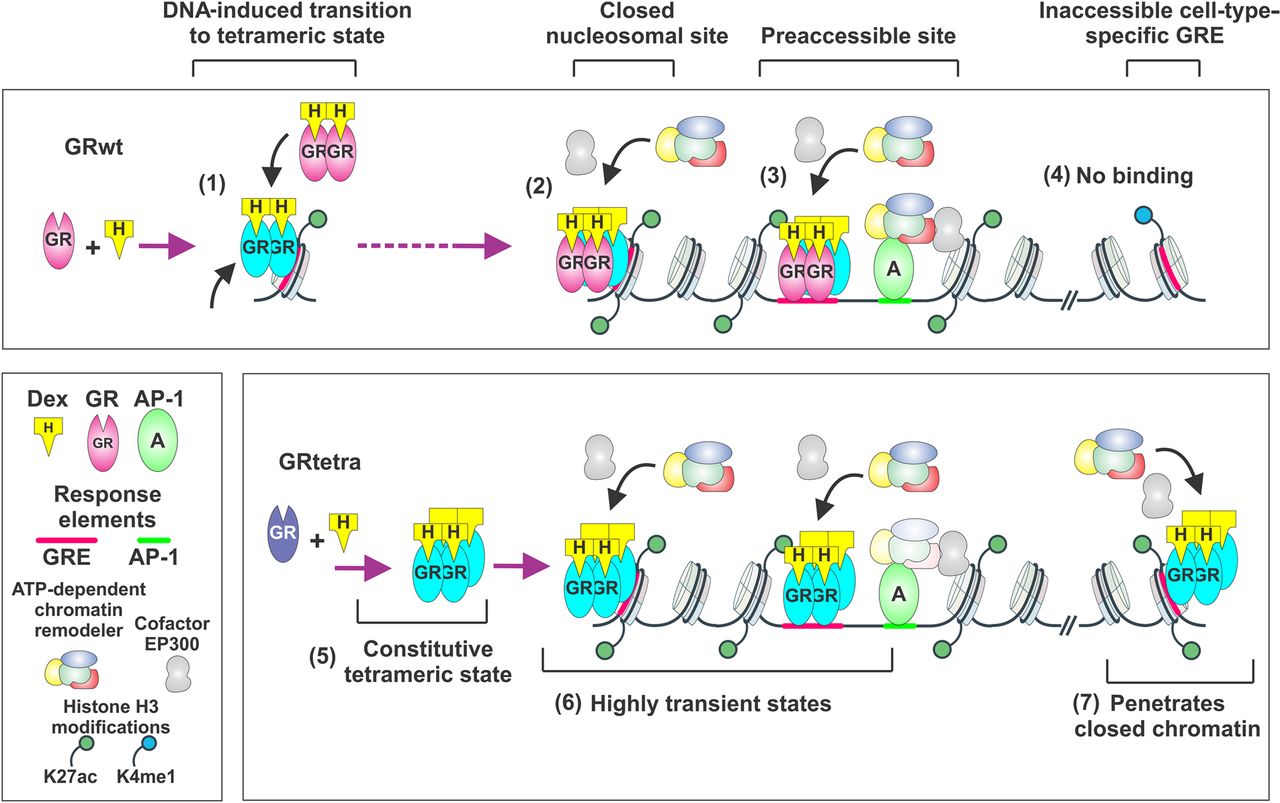
Model of tetrameric GR action on chromatin. Binding of liganded GR to chromatin induces a transition from a dimeric to tetrameric state (1). GRwt can bind to closed nucleosomal sites (2) and to preaccessible sites (3). At both classes of sites, GRwt can recruit chromatin remodelers and other cofactors to increase chromatin accessibility and influence gene expression. AP-1 (or other initiating factors) maintains chromatin preaccessible sites before receptor binding. GRwt is incapable of binding to inaccessible GREs (4). Liganded GRtetra (GR-P481R) is constitutively tetrameric (5). Liganded GRtetra binds to the same sites as GRwt. The binding of receptor represents transient states (6) with relatively brief residence times in live cells. In addition, GRtetra can penetrate GREs marked with H3K4me1 that are inaccessible to GRwt (7). These GRtetra-specific sites can influence gene expression.