


Cover image
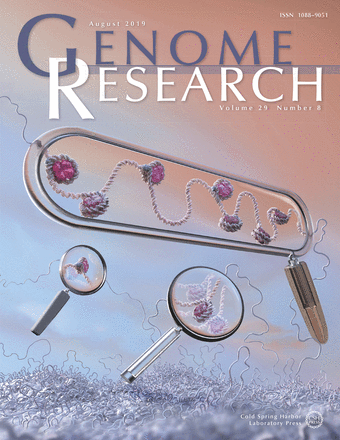
In this issue, Wang et al. utilize nanopore sequencing and DNA methyltransferase treatment in developing a novel approach, MeSMLR-seq, for characterizing nucleosome occupancy and chromatin accessibility at single long DNA molecules. Most existing techniques based on short-read sequencing (represented by small magnifying glasses) can only capture the average patterns of nucleosome occupancy and chromatin accessibility in DNA molecules from different cells (represented by blurred and overlapping DNA molecules with variable nucleosome occupancies). By comparison, MeSMLR-seq can display many nucleosomes at their natural positions in long genomic regions of a single DNA molecule (represented as an “ultra-long” magnifying glass). The strands of chromatin in the foreground reflect the complex chromatin status within a nucleus. (Cover artwork by Victor O. Leshyk, www.victorleshyk.com. [For details, see Wang et al., pp. 1329–1342.])

