


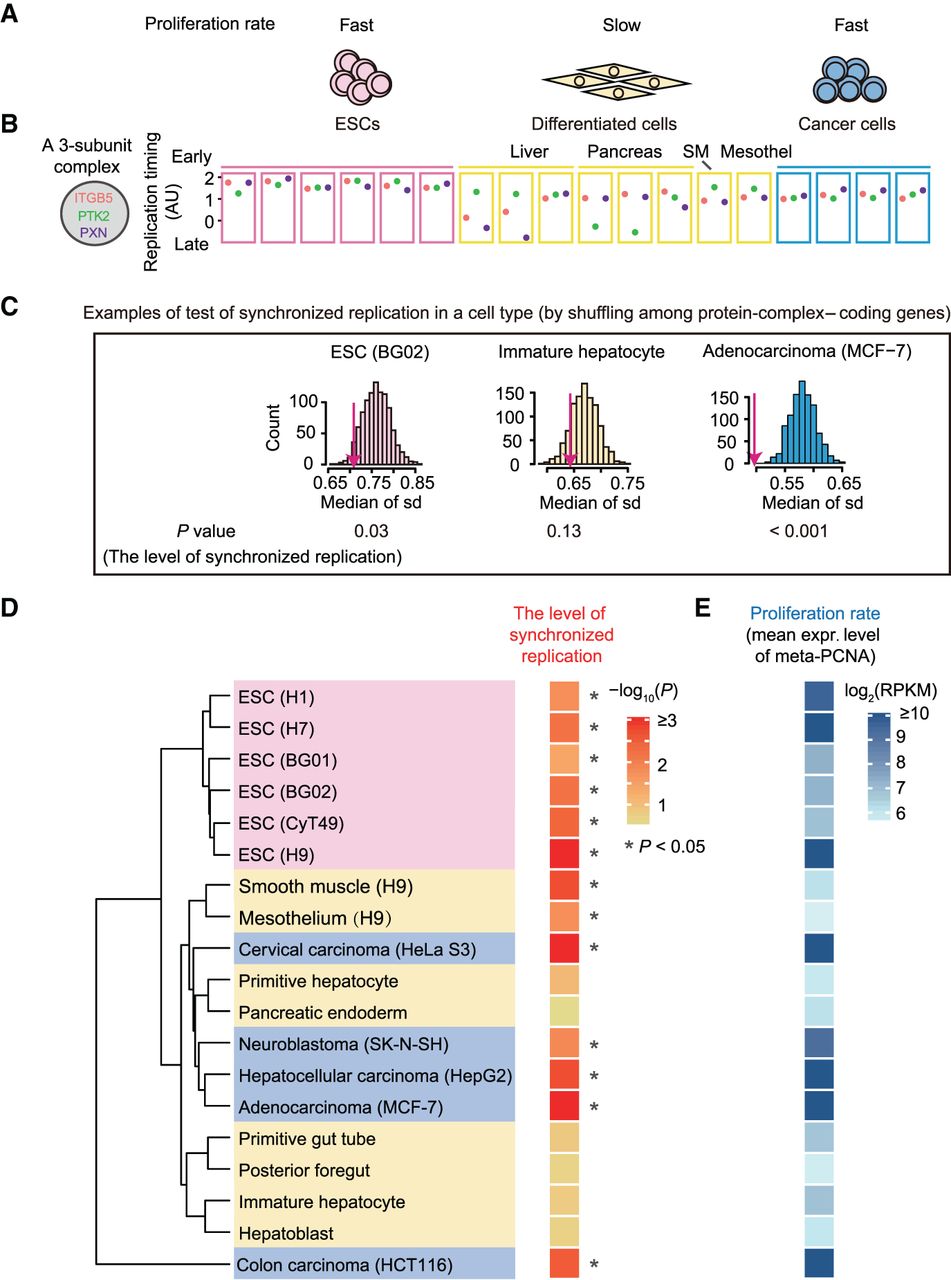
Synchronized replication of genes in the same protein complex occurs mainly in fast-proliferating cells. (A) Nineteen cell lines/types across ESCs, differentiated cells, and cancer cells are used to detect the synchronized replication. Differentiated cells include liver, pancreas, smooth muscle (SM), and mesothelial cells (mesothel) derived from hESCs. (B) Replication timing of three genes encoding a three-subunit protein complex in each cell line/type. HCT116 (shown in Supplemental Fig. S4A) is not shown here because it deviates from others in replication timing. (C) Three examples of the tests for synchronized replication. The observed median standard deviation (sd) of replication timing of genes encoding the same protein complex (magenta) is showed on the distribution of the random expectations (blue). (D) Synchronized replication occurs in 11 fast-proliferating cell lines and two slow-proliferating cell types. The dendrogram (left) shows the clustering of 19 cell lines/types based on the replication-timing profile of all protein-coding genes and was generated with Ward's method in the hclust function of R (R Core Team 2018). The heat map on the right shows the level of synchronized replication estimated from the permutation test. The asterisk indicates that replication is synchronized (P < 0.05) in the corresponding cell line/type. (E) The proliferation rate was estimated from the average expression level of 30 meta-PCNA genes.



