


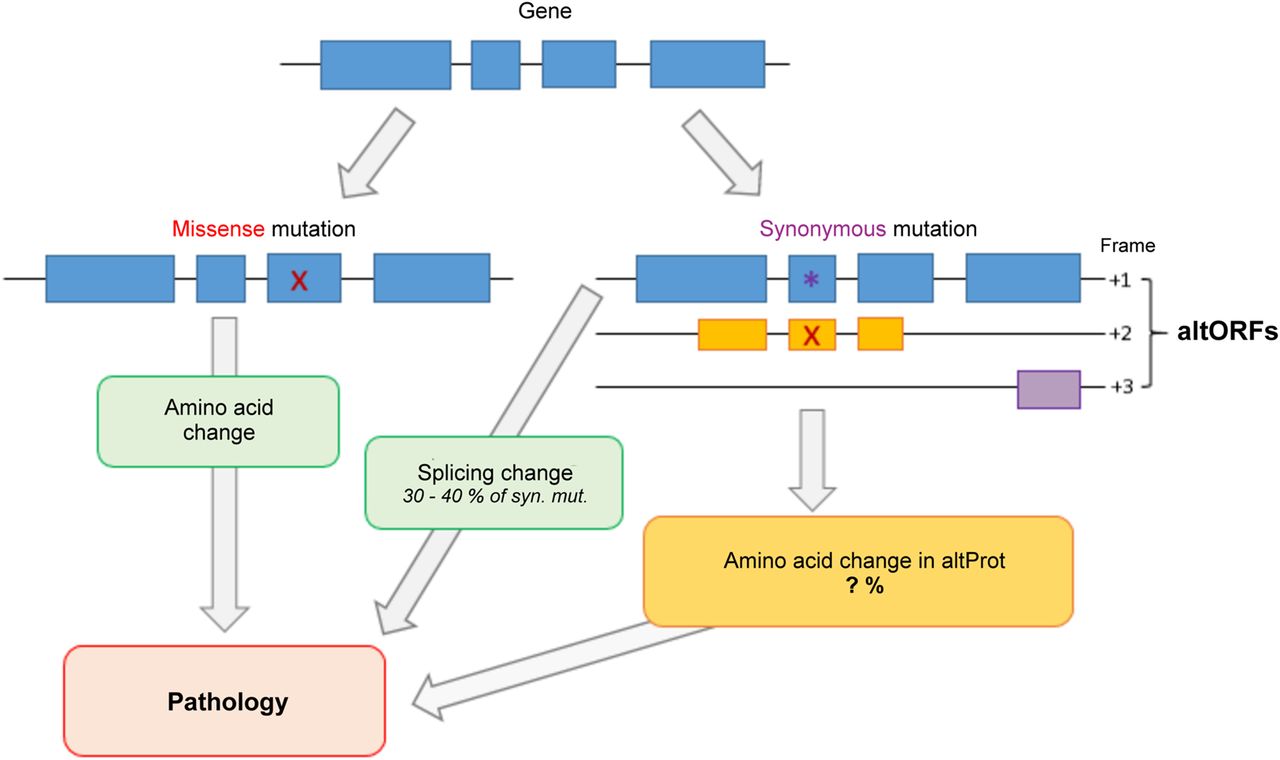
Graphical representation of ways a genetic mutation might cause pathology. Mutations from a single nucleotide variation (SNV) can result either in a missense mutation (red X) or in a synonymous mutation (purple star). Missense mutations are the most studied, as they lead to an amino acid change in the gene's annotated protein sequence. Synonymous mutations are studied mostly for their likelihood to alter splicing sites (about 30% of cases). However, a synonymous mutation in a gene's annotated protein sequence (in blue) might cause an amino acid change in a protein encoded in an alternative open reading frame (altORF/altProt—in yellow). These altered proteins might be a yet unexplored mechanism by which a SNV is pathological.



