


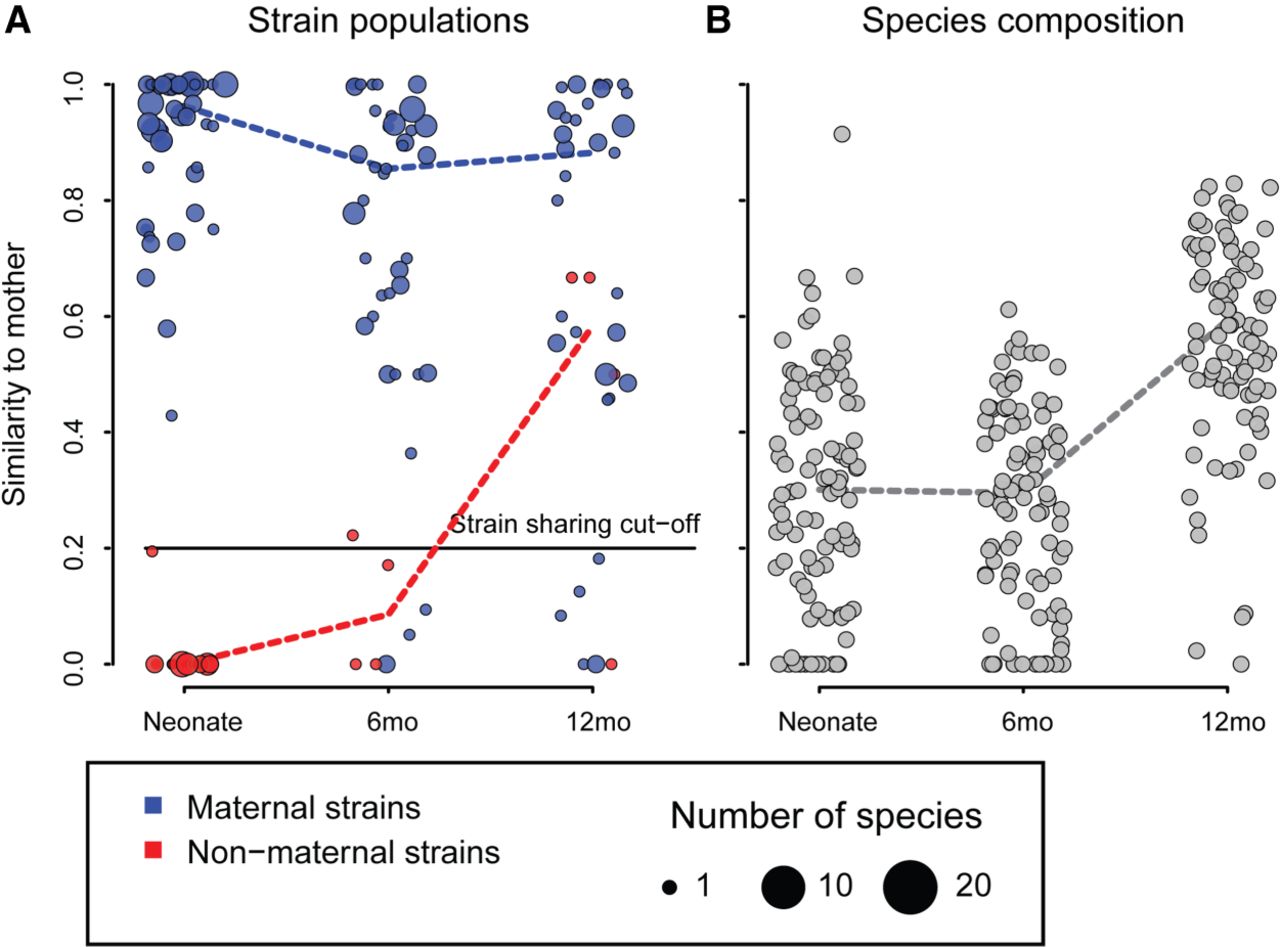
Figure 1.
Similarity to mother over time of vaginally born infants (n = 114), measured as rmSNV similarity (A) and species composition similarity (B). Strains were classified as originally maternal if rmSNV similarity to mother was >0.2 (strain sharing cut-off) in the first neonatal sample available for each pair. Maternal/nonmaternal strains were summarized in each circle as median per individual. Even if the similarity to the mother increased in later time points, the original distinction of maternal/nonmaternal was kept for each child-mother pair through all further time points.



