


Cover image
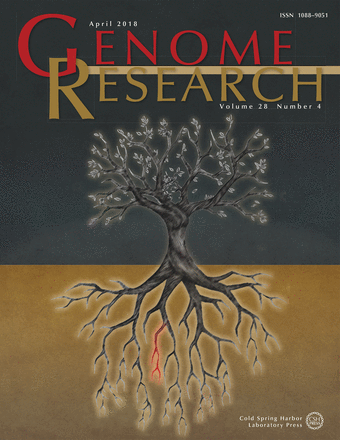
A tree represents a genome. The crown is visible, while the roots, sometimes more extended than the crown, are hidden. DNA variations (in the crown) are at the center of most genomic studies, while RNA variations (in the roots) are not well-described. In this issue, a new type of RNA editing (the newly emerging red roots) is reported in patients with a premalignancy, which could not be predicted by knowing the DNA sequence, thereby expanding the knowledge of “hidden” RNA variations, which could be important for the pathogenesis of diseases. (Cover illustration by Ioana Vierita and Mihnea Dragomir. [For details, see Shah et al., pp. 432–447.])

