


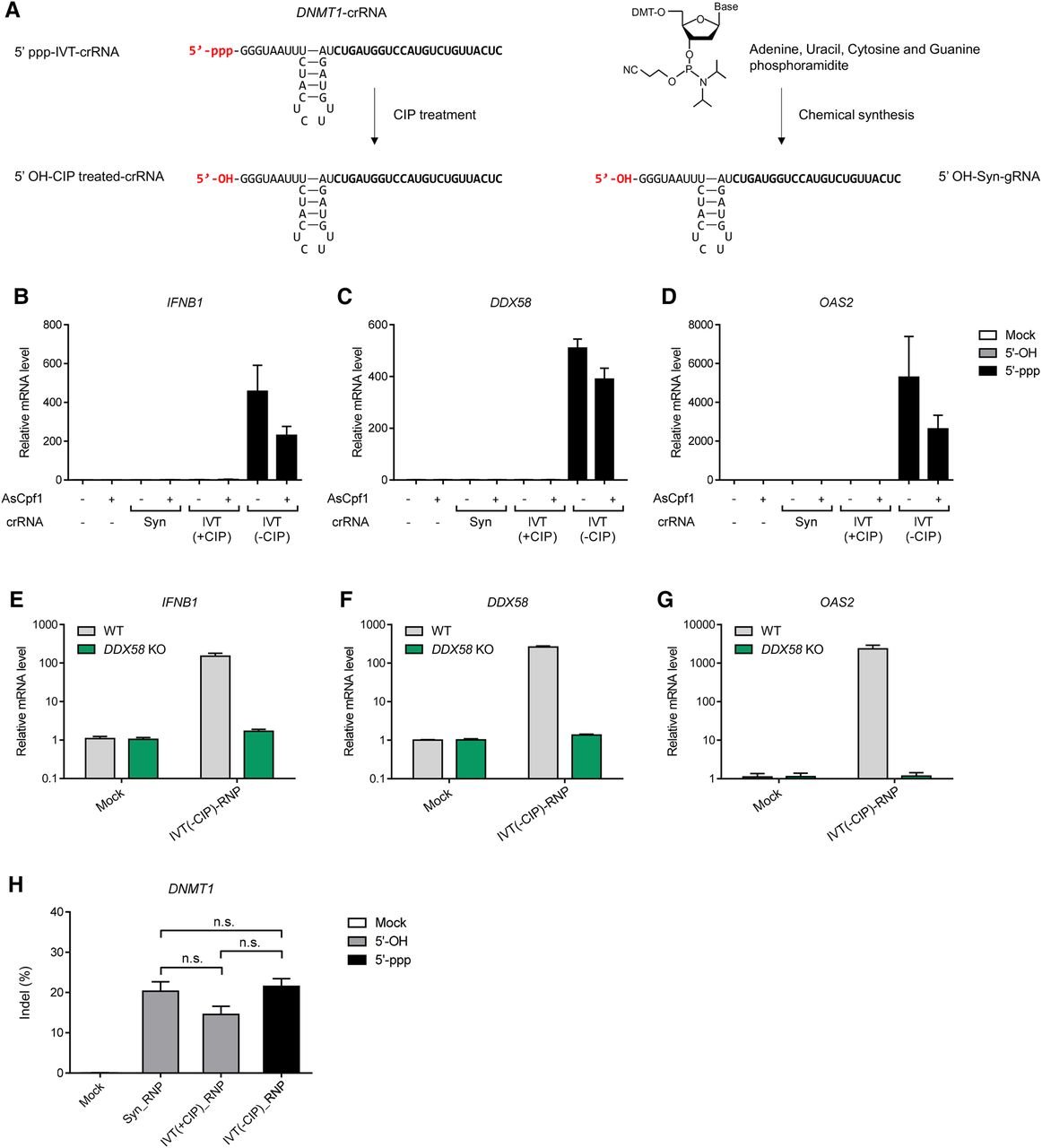
RNA-sensing immune responses activated by the AsCpf1-associated crRNA. (A) Schematics of DNMT1-targeting crRNAs, which vary according to their preparation methods. crRNA sequences complementary to the DNMT1-target site are shown in bold. (B–D) Relative IFNB1 (B), DDX58 (C), and OAS2 (D) mRNA levels at 24 h after transfection. Error bars, SEM; n = 3. (E–G) Relative IFNB1 (E), DDX58 (F), and OAS2 (G) mRNA levels in WT and DDX58 KO HeLa cell lines at 24 h post-transfection. Error bars, SEM; n = 3. (H) Indel frequencies induced by the DNMT1-targeting AsCpf1 RNP were measured using next-generation sequencing (NGS). Statistical significances were calculated by t-test. (n.s.) Not significant, (Syn) chemically synthesized crRNA, (IVT) in vitro–transcribed crRNA, (± CIP) in vitro–transcribed crRNA with or without CIP treatment.



