


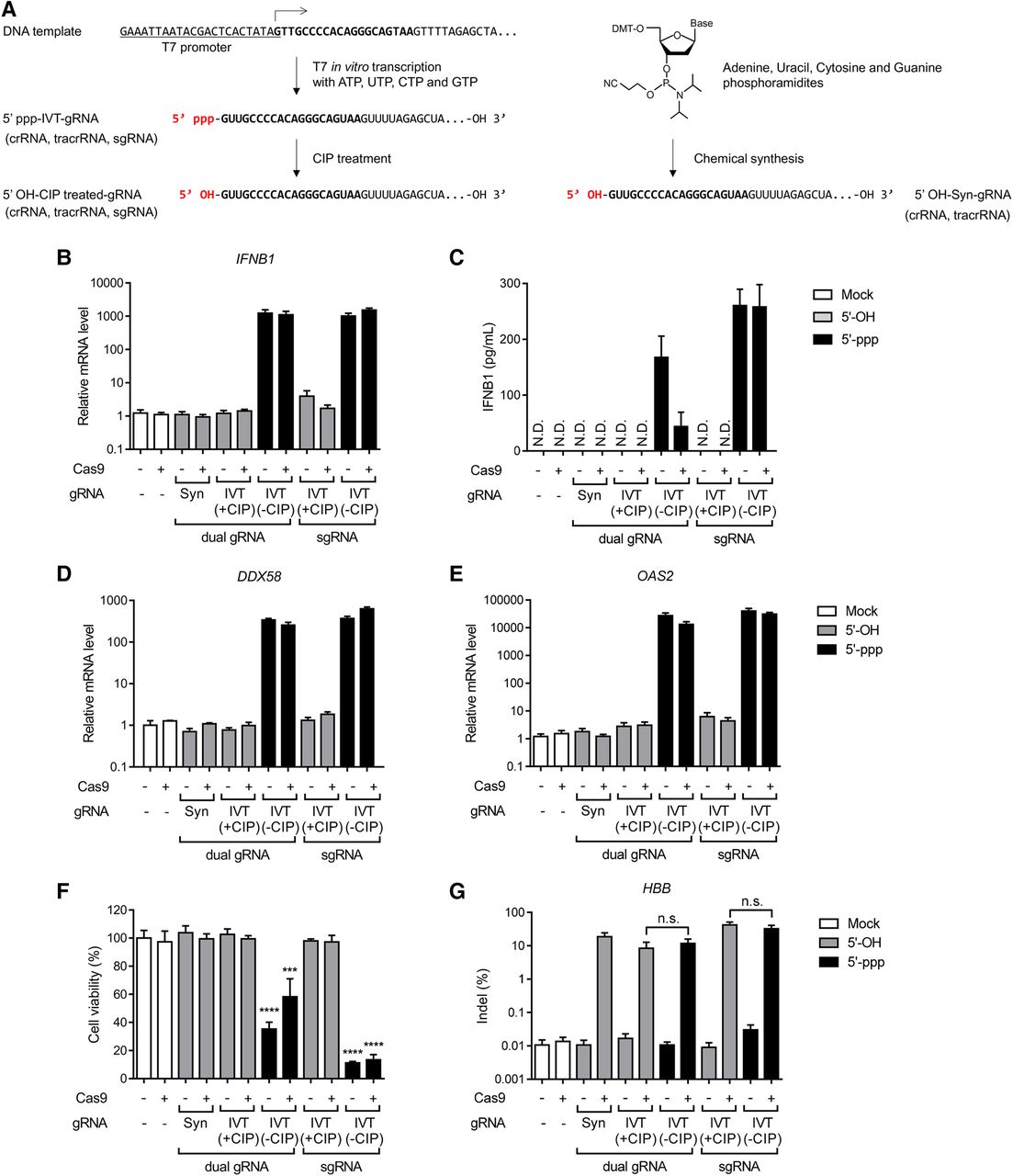
Induction of type I interferon-mediated innate immune responses in HeLa cells by in vitro–transcribed gRNA containing 5′-triphosphate. (A) Schematic representation of gRNA 5′ ends, which vary according to the gRNA preparation method. gRNA sequences complementary to the HBB-target site are shown in bold. (B,D,E) Relative IFNB1 (B), DDX58 (D), and OAS2 (E) mRNA levels 24 h after transfection. Error bars, SEM; n = 3. (C) IFNB1 levels were measured by ELISA. Error bars, SEM; n = 3. (N.D.) None detected. (F) Cell viabilities after RNP transfection were determined by WST-1 assays. Error bars, SEM; n = 2. Statistical significances between the different measurements were calculated using one-way ANOVA. (***) P < 0.001, (****) P < 0.0001. (G) Indel frequencies induced by the HBB-targeting Cas9 RNP were measured by targeted deep sequencing. Error bars, SEM; n = 3. Statistical significances were calculated by t-test. (n.s.) Not significant, (Syn) chemically synthesized guide RNA, (IVT) in vitro–transcribed gRNA, (±CIP) in vitro–transcribed gRNA with or without CIP treatment.



