


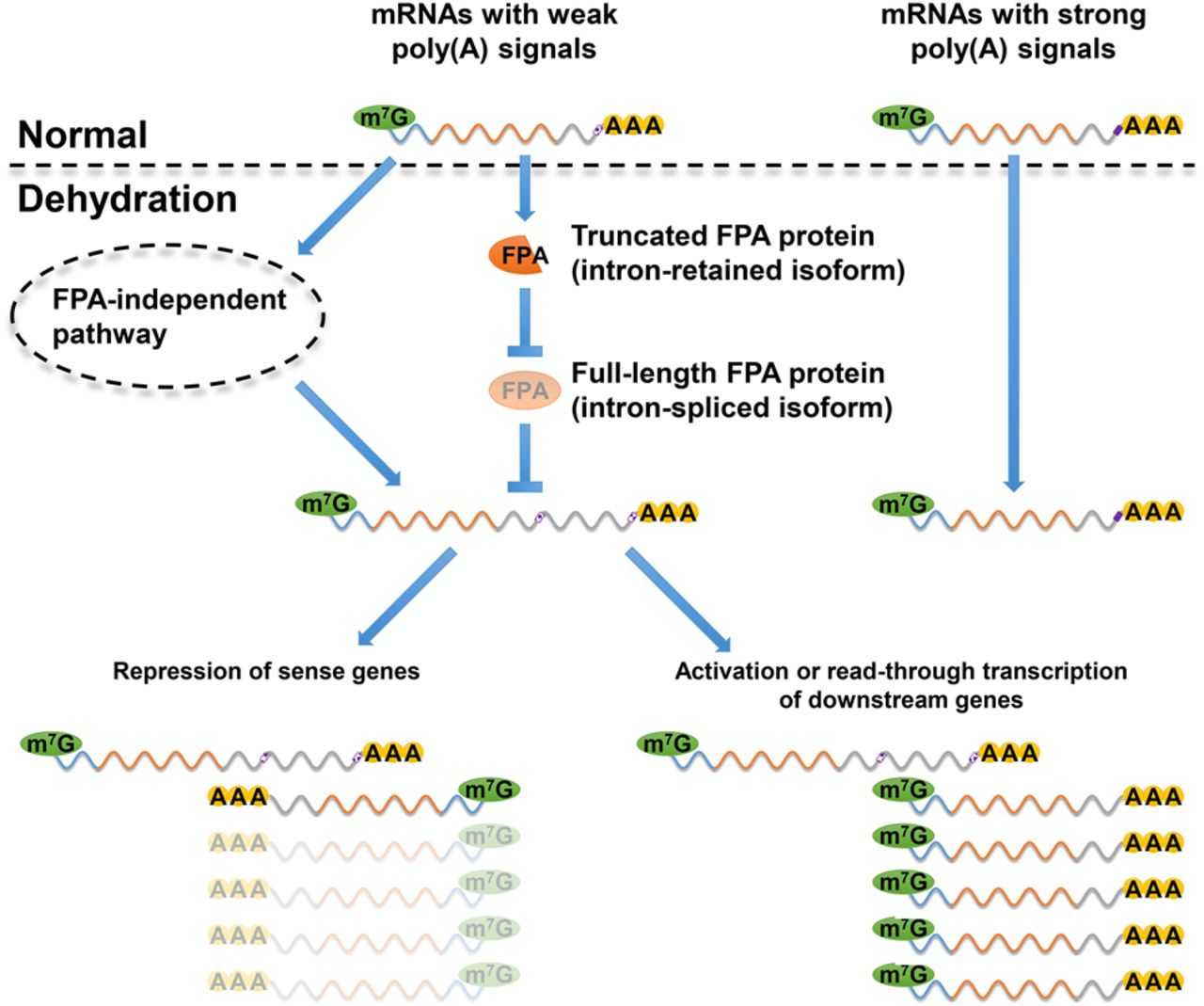
A proposed model for the biogenesis and function of dehydration stress–induced 3′ UTR extensions. Biogenesis of 3′ UTR extensions depends on cis-acting poly(A) signals, trans-acting regulator FPA, and a FPA-independent pathway. In normal growth condition, transcripts are polyadenylated at the proximal poly(A) site regardless of the strengths of poly(A) signals, whereas in dehydration-stressed condition, reduced FPA function causes 3′ UTR extensions of transcripts only if they have weaker poly(A) signals, which might be mediated by the competition of truncated FPA proteins. In addition, a FPA-independent pathway also contributes to the biogenesis of 3′ UTR extensions. The extended 3′ UTRs have characteristics of long noncoding RNAs and can function as repressors of their sense genes or activators of their downstream genes.



