


Cover image
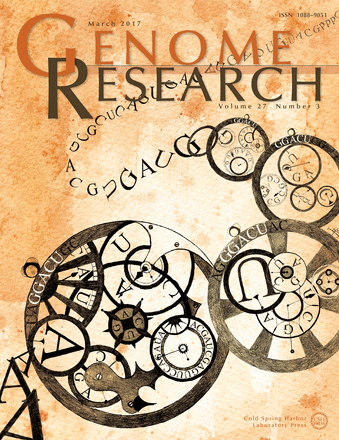
Phenotypic differences within populations and between closely related species are often driven by variation and evolution of gene expression. However, most analyses have focused on the effects of genomic variation at cis-regulatory elements such as promoters and enhancers, and little is understood about the influence of post-transcriptional processes on transcript evolution. Post-transcriptional modification of RNA by N6-methyladenosine (m6A) has been shown to be widespread throughout the transcriptome, and this reversible mark can affect transcript stability and translation dynamics. In this issue, Ma et al. describe the evolutionary pattern of m6A mRNA modifications in lymphoblastoid cell lines from human, chimpanzee, and rhesus, which adds a post-transcriptional dimension to the hypothesis that regulatory changes largely contribute to phenotypic differences between closely related species. The clocks abstractly represent the evolution of different species throughout time, assembled as an mRNA chain. The conserved m6A motif sequence GGACU is displayed on the bezel, with its methyl group illustrated as the winding crown. (Cover illustration by Isabel Romero Calvo. [For details, see Ma et al., pp. 385–392.])

