


Cover image
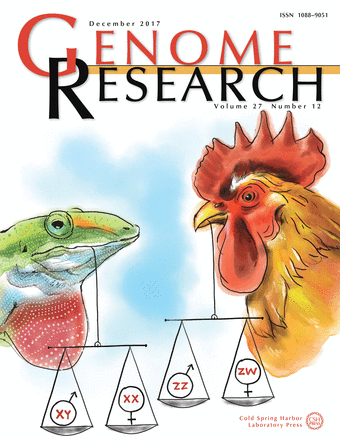
The process of sex chromosome differentiation from ancestral autosomes frequently involves the degeneration of one of the sex chromosomes (i.e., the Y and W Chromosomes in male and female heterogametic systems, respectively). The resulting twofold reduction in sex chromosome gene dosage triggered the evolution of various compensation mechanisms that ultimately balance gene expression output between sex chromosomes and autosomes, as well as between the two sexes. In this issue, the studies by Marin et al. and Warnefors et al. describe the detection of two novel dosage compensation mechanisms in reptiles and birds, respectively. The cover portrays the two focal species of these studies (i.e., a [male] green anole lizard and chicken, respectively) holding suspended scales with the male/female sets of sex chromosomes found in these species, to illustrate the balanced gene expression output between the sexes due to the detected mechanisms. (Cover illustration by Raman Bhardwaj, based on concepts and guidance by the Kaessmann lab. [For details, see Marin et al., pp. 1974–1987, and Warnefors et al., pp. 1961–1973.])

