


Cover image
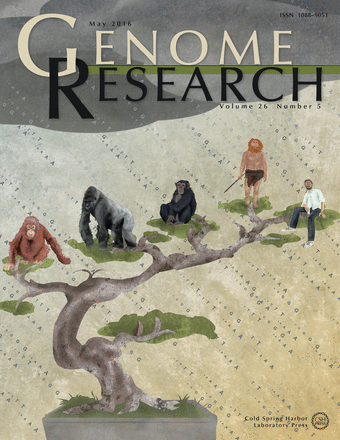
The accepted molecular evolution theories postulate that gradual and slow accumulation of genomic variations is the basis of diversification in all kingdoms of life. Recently, studies have described localized hypermutation in human cancers, named kataegis (“thunder” in Greek), induced by a member of the cytidine deaminase family of enzymes—APOBEC3. This family expanded in primates, likely driven by selective pressures. In this issue, a study describes evidence for tens of thousands of clustered mutations that bear the APOBEC3G mutagenesis pattern in primate genomes. These APOBEC3G-induced mutations exhibit a higher tendency to occur in functional genomic regions and hence may have contributed to primate diversification. The cover depicts a storm of mutations raining on the primate phylogenetic tree. (Cover illustration by Nechama Rosenstein, nepaul86{at}gmail.com. [For details see Pinto et al., pp. 579–587.])

