


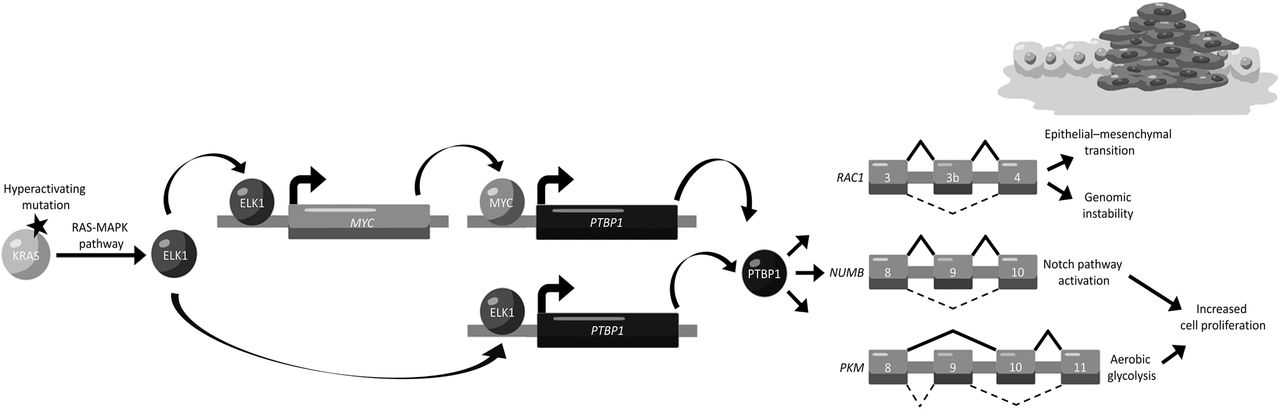
Regulatory pathway leading to colon cancer–promoting splicing aberrations. ELK1 overexpression results from increased activity of the RAS-MAPK pathway due to hyperactivating KRAS mutations. This leads to increased transcription of MYC and PTBP1. Increased MYC levels also lead to increased PTBP1 levels. PTBP1 overexpression is one of the elements responsible for an alternative splicing profile associated with colon cancer. Among some of the alternative splicing pattern shifts induced by PTBP1 are the inclusion of RAC1 exon 3b, the increased inclusion of NUMB exon 9, and the favoring of PKM exon 10 inclusion over exon 9 inclusion. These contribute to colon adenocarcinoma development by increasing cell proliferation and leading to genomic instability and epithelial–mesenchymal transition.



