


Cover image
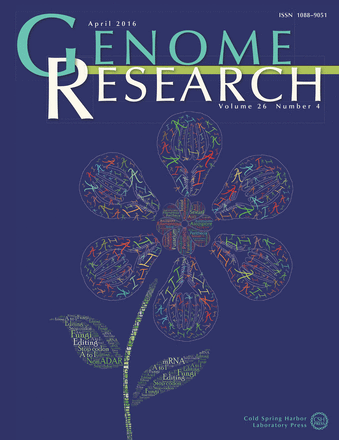
Adenosine deaminase acting on RNA (ADAR) enzyme-mediated adenosine-to-inosine (A-to-I) editing is the most prevalent post-transcriptional modification of RNA in animals. Organisms outside the animal kingdom do not have ADAR orthologs and are believed to lack A-to-I RNA editing. In this issue, however, a study demonstrates that genome-wide A-to-I RNA editing occurs in fungi specifically during sexual reproduction, involving adenosine deamination mechanisms distinct from animal ADARs. In the illustration, six perithecia (fruiting bodies) of filamentous ascomycetes represent the flower petals. Letters “A” and “I” of different colors and sizes represent diverse editing sites and editing levels in perithecia. The center of the flower represents ascospores (sexual spores, eight per ascus) released from perithecia, which are each filled with phrases used to describe stage-specific RNA editing in fungi. The leaves are filled with the tag cloud of keywords from this study and connected to the pedicel consisting of the four canonical bases (ACGU) of RNA. The tag cloud was created using Tagxedo (http://www.tagxedo.com/). (Cover illustration by Huiquan Liu and Qinhu Wang, with helpful comments from the rest of the members from the Xu Lab at NWAFU. [For details, see Huiquan Liu et al., pp. 499–509.])

