


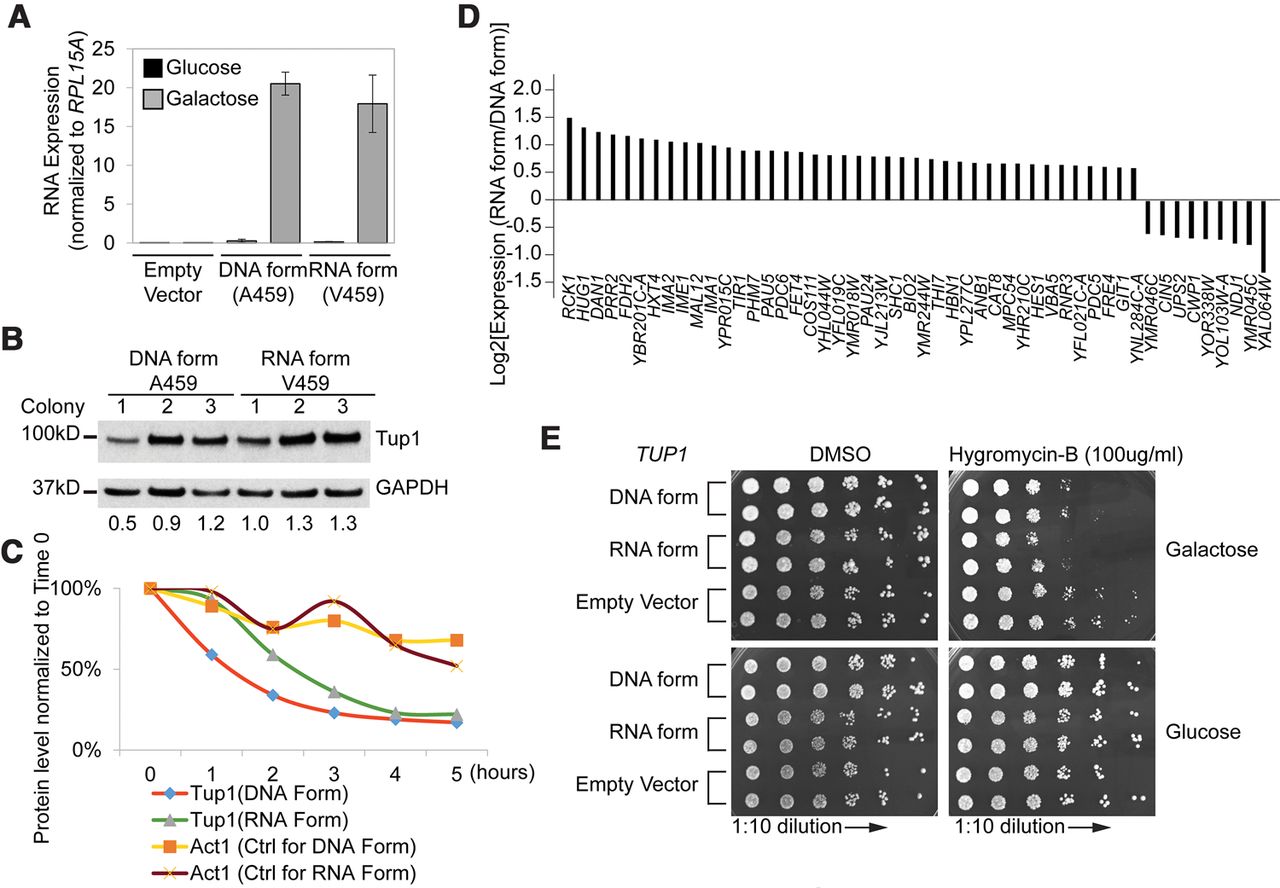
Effects of an RDD in TUP1 on protein stability and function. (A) DNA form and RNA form of TUP1 were cloned into yeast plasmids under the control of a GAL1 promoter, and expression of each form was induced by galactose. The two forms had similar mRNA levels, as determined by real-time RT-PCR. Yeast colonies (n = 3) transformed with empty vector, DNA form, and RNA form of TUP1 are shown. Error bars represent standard deviation of three colonies. (B) Protein level of the RNA form of Tup1 is higher than that of DNA form. Whole-cell extracts of the same colonies in A were analyzed by Western blot. Intensity of each band of Tup1 is quantified using ImageJ and normalized to that of GAPDH, and their values are shown below each band. (C) Cycloheximide chase assay showed that RNA form of Tup1 is more stable than the DNA form. The Act1 level from each transformant was measured as control. (D) Genes that are differentially regulated by DNA and RNA form of Tup1. Gene expression levels were measured by RNA-seq of yeast cells expressing either form of Tup1. (E) Yeast expressing the RNA form of Tup1 is more sensitive to hygromycin B. Yeast cells were cultured in liquid medium; 10× serial dilutions were spotted onto plates containing hygromycin B or DMSO control to measure cell growth. Tup1 expression is induced by galactose in plates. Cells were also spotted on plates containing glucose as a negative control.



