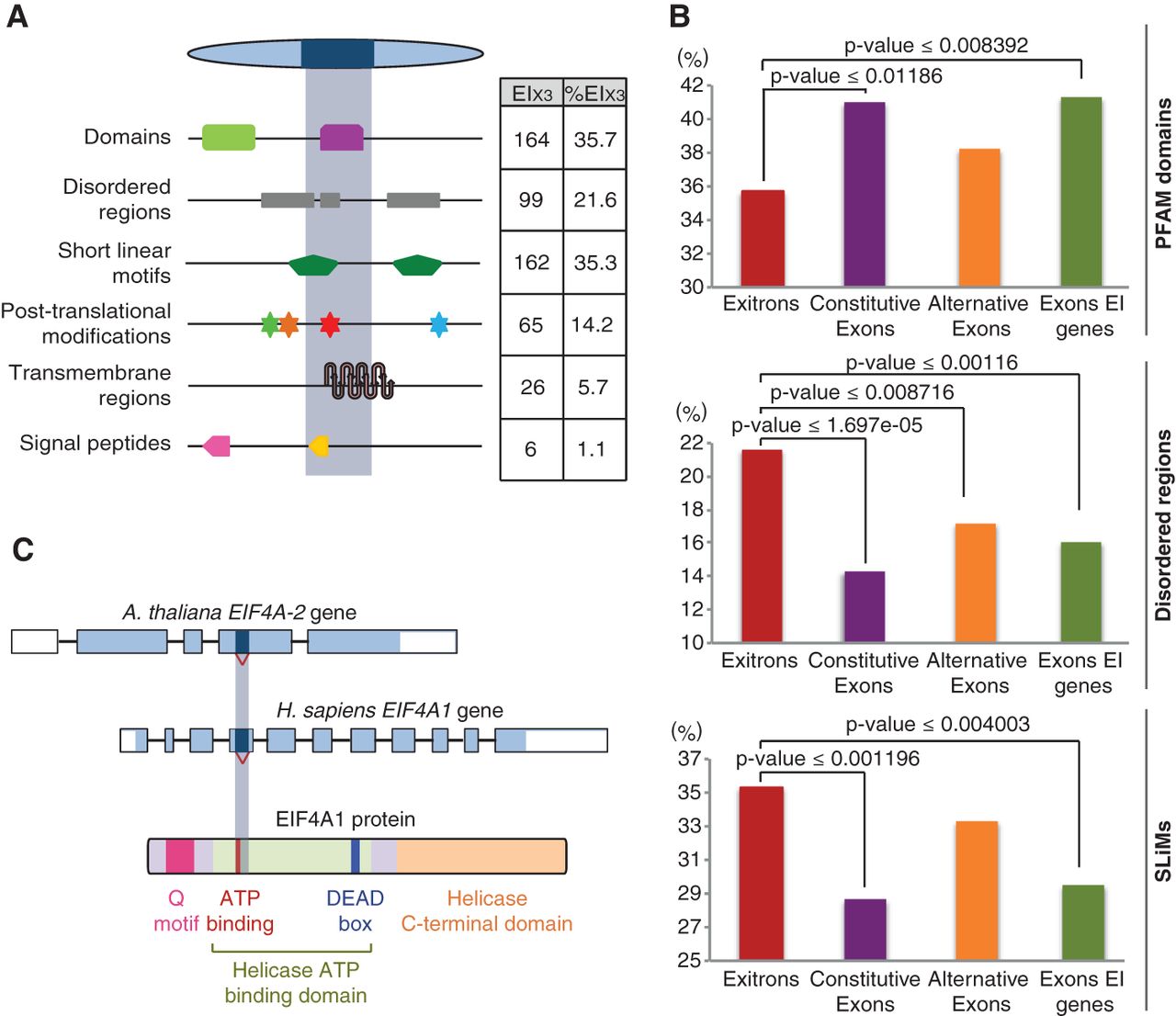
Figure 4.
Functional implications of EIS in Arabidopsis. All analyses were performed for the EIx3 subset only. (A) Statistics of functional features of protein sequences encoded by EIs. (B) Enrichment of PFAM domains, disordered regions, and short linear motifs (SLiMs) in protein sequences encoded by EIs and different types of exons. (C) EIS removes the ATP-binding domain of the conserved eukaryotic translation initiation factor 4A in Arabidopsis and human.