


Cover image
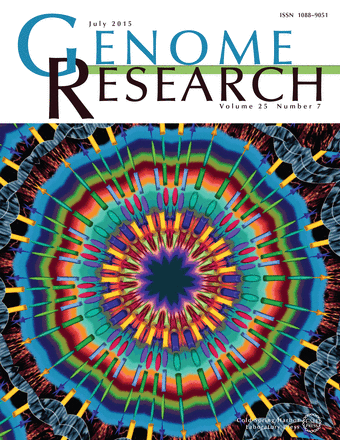
Alternative splicing is a key mechanism in controlling gene expression and is a major source of proteome complexity in eukaryotes. In this issue, a study describes an often overlooked facet of alternative splicing—exitron splicing. Exitrons (exonic introns) are internal parts of protein-coding exons that are alternatively spliced and thus contribute to proteome plasticity. The cover image is a kaleidoscopic view of the proteome, reflecting the diversity generated by alternative splicing. Radial shapes illustrate protein isoforms with variable domain compositions. The circles depict developmental stages and environmental conditions modulating alternative splicing outcomes. (Cover illustration by Maria Kalyna. [For details, see Marquez et al., pp. 995–1007.])

