


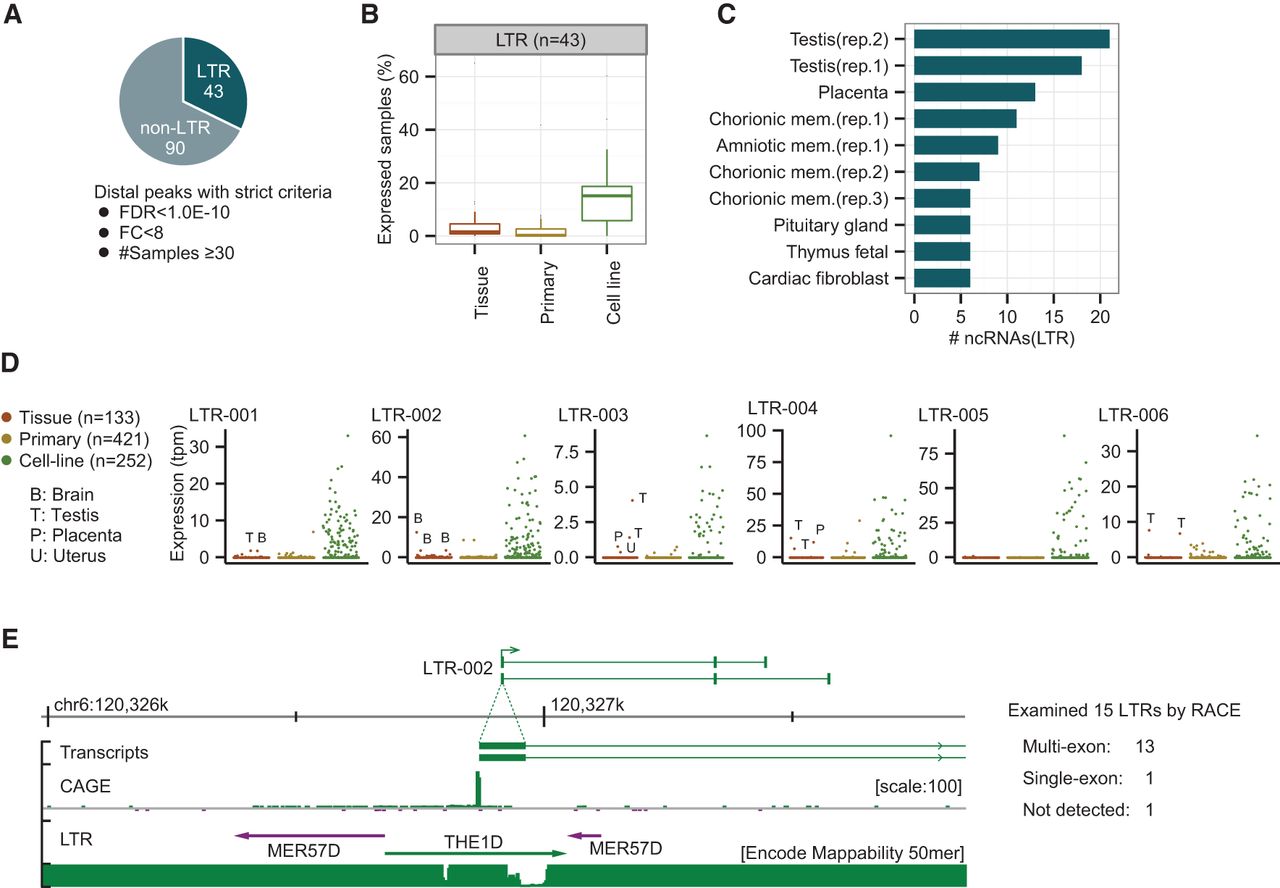
LTR-derived ncRNAs found in HCCs are also expressed in reproductive tissues and cell lines. (A) Number of LTR-derived (43) and non-LTR-derived (90) ncRNAs among the up-regulated distal ncRNAs. The selection criteria are as follows: FDR threshold < 1.0 × 10⁻¹⁰; fold change > 8; expression in at least 30 tumor samples. (B) Proportion of tissues, primary cells, and cell lines that expressed the 43 LTR-derived ncRNAs according to FANTOM5. The LTR expression threshold value is the median expression level of the working set of 50 HCC tumors. (C) Top 10 normal tissues and primary cells that express the LTRs according to FANTOM5. (Rep) Biological replicates prepared in FANTOM5. (D) Expression patterns of the six most strongly expressed LTRs in the human body. LTR-003, 004, and 006 are only expressed in reproductive tissues (testis, placenta, and/or uterus). LTR-001 and 002 are expressed in brain. (E) Full-length ncRNAs with LTR promoters determined by 3′ RACE. Thirteen out of 15 LTRs are confirmed as promoters of multiexon ncRNAs. LTR-002 is shown as an example of identified transcripts.



