


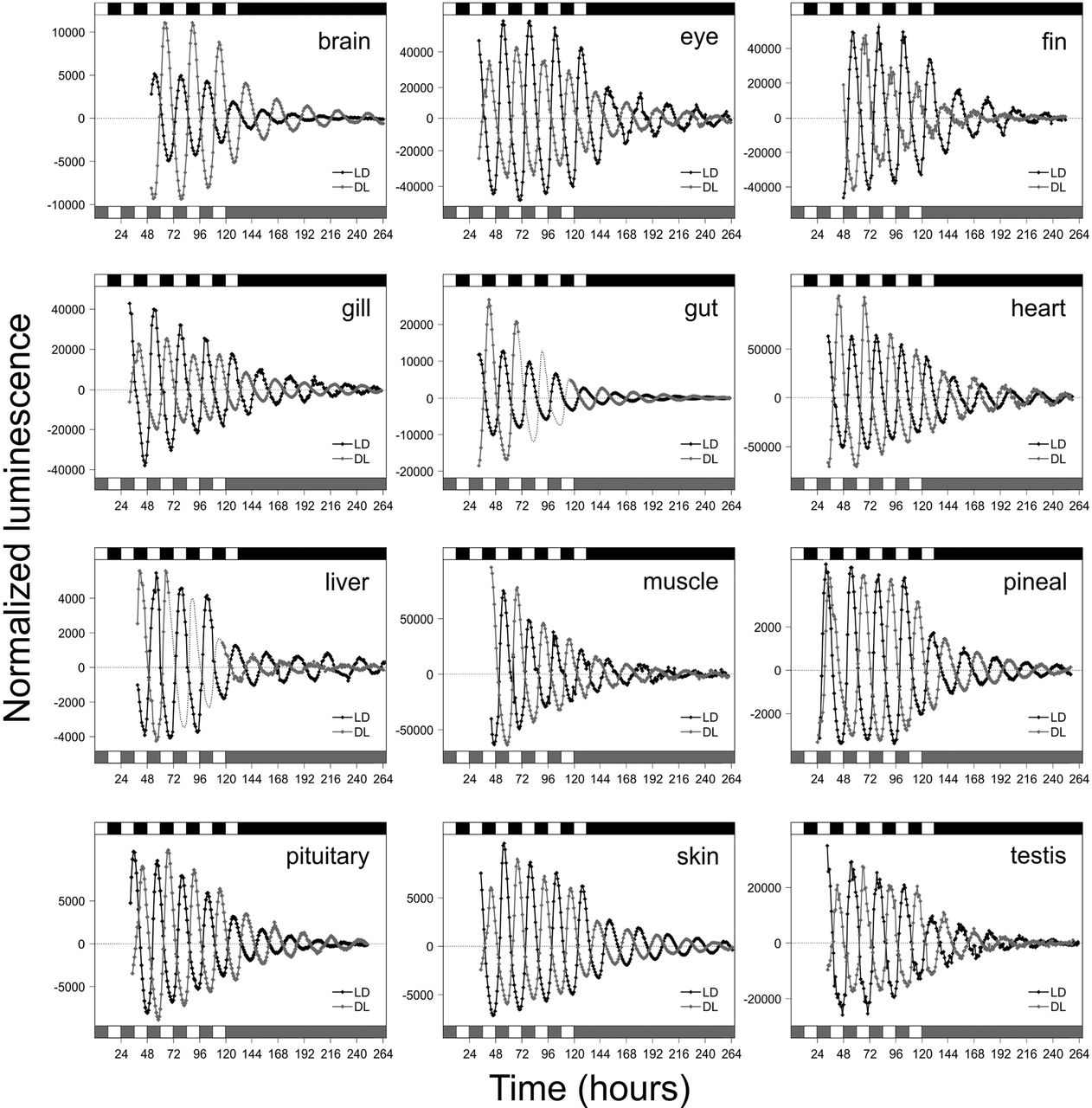
Light-entrainable circadian clocks are present in adult zebrafish (Danio rerio) tissues, specifically brain, eye, fin, gill, gut, heart, liver, muscle, pineal, pituitary, skin, and testis. Bioluminescence was monitored throughout the experiment and showed alternating cycles of per3 expression when tissues were exposed either to a forward cycle of 12 h of light, 12 h of dark (LD; black) or to an inverse cycle of 12 h of dark, 12 h of light (DL; gray). Note that open and solid boxes represent periods of light and darkness, respectively. In gut and liver experiments, a gray dotted line represents interpolated cycles of bioluminescence where data are partly absent. All tissues experienced LD or DL conditions for 5 to 6 d prior to transference into constant darkness for 7 d.



