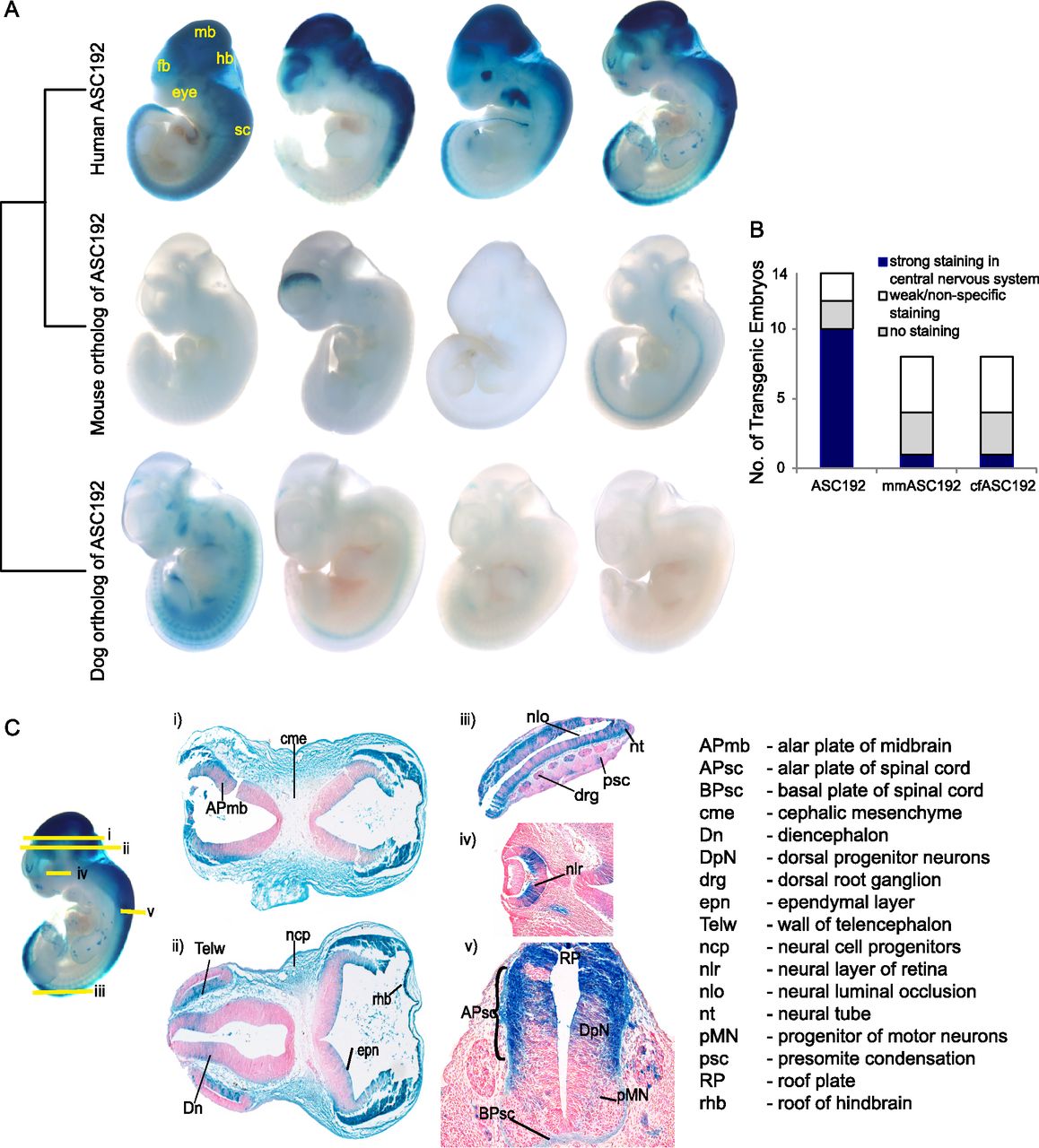
Primate-specific enhancer function of ASC192. (A) ASC192 drives consistent primate-specific lacZ expression in the developing central nervous system of E11.5 mouse embryos; four representative embryos are shown for each construct: (fb) forebrain; (mb) midbrain; (hb) hindbrain; (sc) spinal cord. For the entire set of transgenic embryos, see Supplemental Figures S4–S6. (B) Enhancer success rates for ASC192 and its orthologs: ASC192 drove strong lacZ expression in 10/14 transgenic embryos, whereas the mouse and dog orthologs of ASC192 drove strong reporter gene expression in only 1/8 transgenics. (C) Transverse sections of a representative ASC192 embryo; strong expression is visible in forebrain, midbrain, and hindbrain (i, ii). lacZ expression coincides with neuroepithelial zones that spawn neural progenitors (iii, v) and also with neural retina (iv). In the spinal cord, lateral to the roof and floor plates, enhancer activity localizes to regions containing dorsal spinal interneurons and motor neuron progenitors (v).