


Cover image
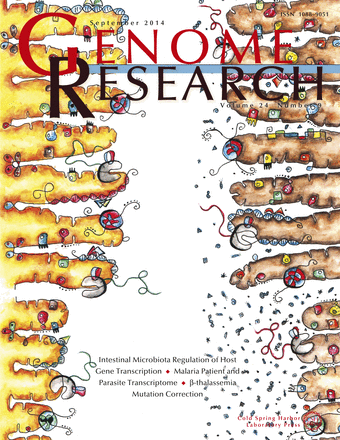
Cover An artistic depiction of the complex interactions occurring between bacteria and host cells at the intestinal epithelium interface, highlighting the mechanics of host transcriptional regulation by RNA polymerases, DNA-binding transcription factors, and nucleosome occupancy. The intestinal epithelium is the primary interface between animal hosts and their microbiota, and it encounters dynamic environmental stimuli along the length of the gut. In this issue, the mechanisms by which microbiota regulate intestinal gene expression are explored by profiling the accessible chromatin and transcriptome landscapes in the ileal and colonic epithelia of mice living in the presence or total absence of microbiota. On the left is a small intestinal (top) and colonic (bottom) epithelium lacking microbiota (yellow); on the right is epithelium colonized with microbiota (brown). Comparison between these microbiota-free and colonized states suggests that the chromatin landscape in intestinal epithelial cells is preprogrammed by the host in a region-specific manner and is poised to permit transcriptional responses to microbiota through the binding of accessible regulatory elements by specific transcription factors. (Cover illustration by Barbara Treutlein, Max Planck Institute for Evolutionary Anthropology. [For details, see Camp et al., pp. 1504–1516.])

