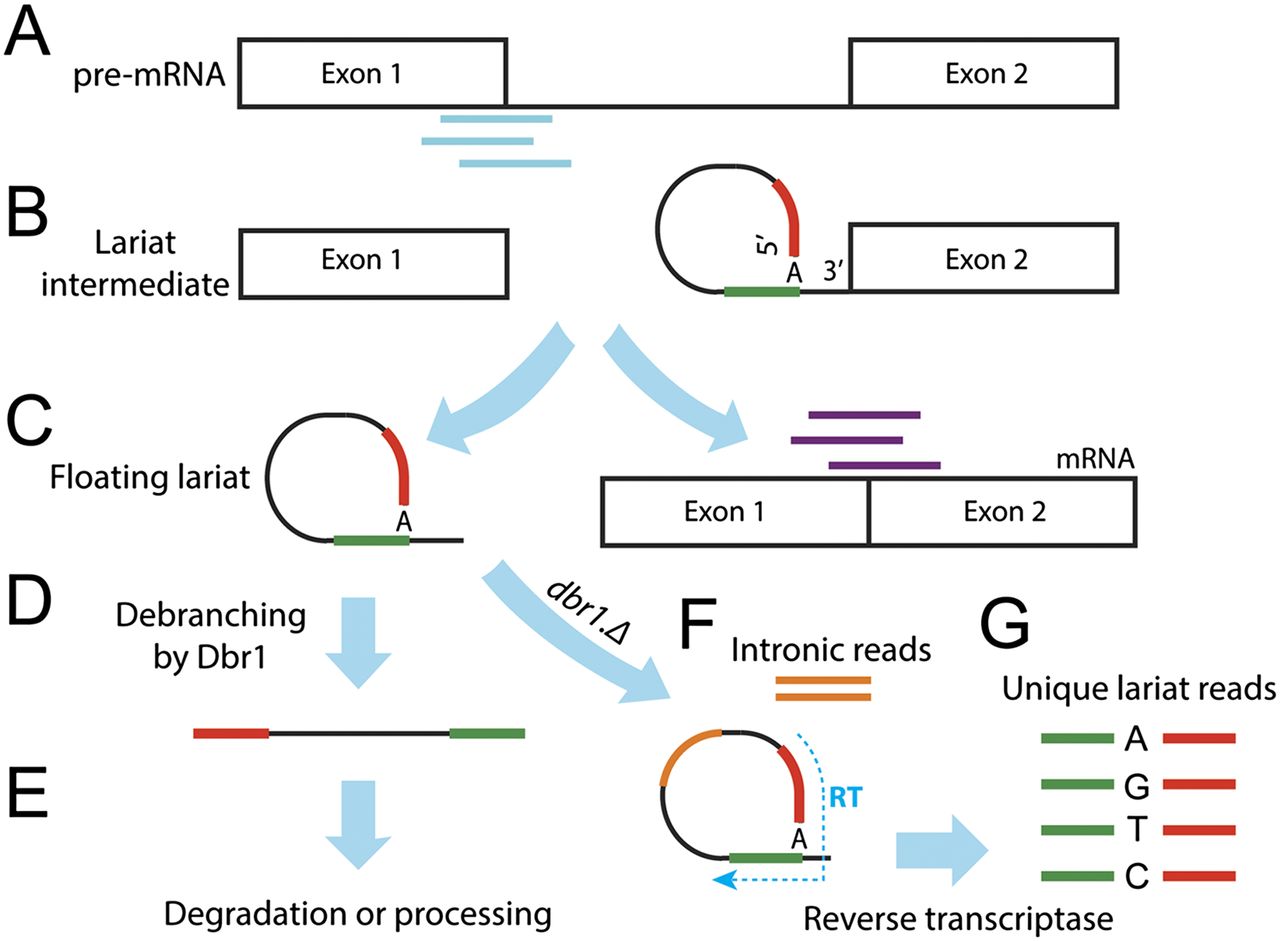
Scheme of intron splicing and diagnostic sequence reads. (A) Pre-mRNA with diagnostic exon-intron reads (cyan). (B) First transesterification reaction: lariat intermediate with phosphodiester bond between 5′ splice donor (red) and branch-point adenine (A) along with upstream sequence (green). (C) Final splicing reaction: exons are ligated yielding mature mRNA with diagnostic exon-exon junction reads (purple), while the lariat is excised. (D) Intron 3′ tail removal and debranching. (E) Rapid degradation or further processing. (F) In dbr1Δ cells, lariats become stabilized and accumulate, resulting in enhanced intronic sequence reads (orange). The reverse transcriptase also reads through the 2′–5′ linkage (hatched blue arrow). (G) This reverse transcription produces unique lariat reads, where the sequence upstream of the branch point (green) precedes the 5′ segment of the intron (red). The enzyme often mutates the branch-point adenine to any other nucleotide as illustrated. The accumulation of lariat structures would inevitably result in the production of additional intronic reads (orange) that enhance intronic expression level.