


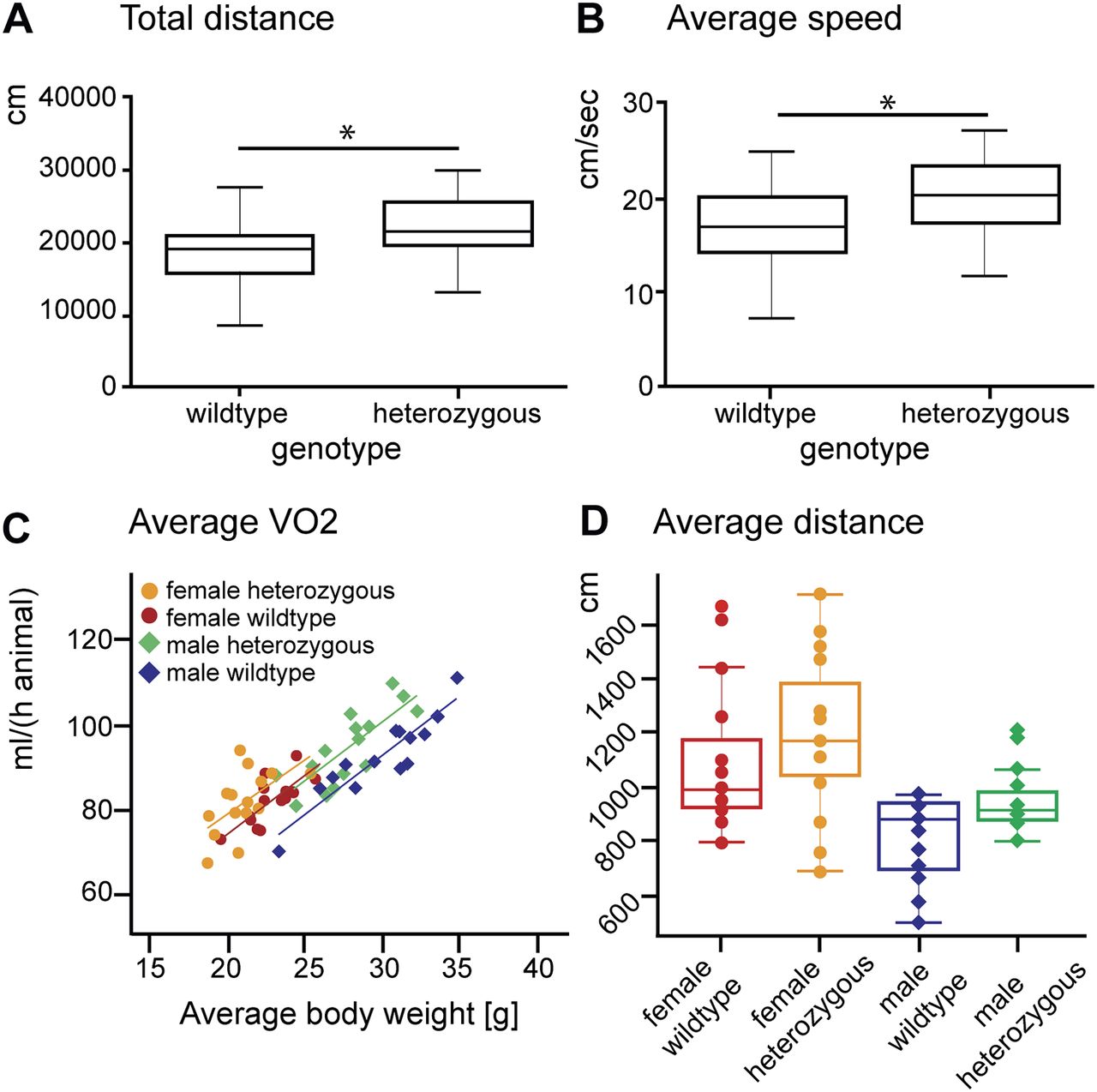
Motor restlessness/hyperactivity in adult heterozygous Meis1tm1Mtor mice. Heterozygous Meis1tm1Mtor (het) traveled a higher total distance (P = 0.003, two-tailed t-tests, n = 29) (A) and moved with a higher speed on average (P = 0.004, two-tailed t-tests, n = 30) (B) in a 20-min open field test for spontaneous locomotor activity in a novel environment. (C) Oxygen consumption (mL/h) plotted versus body mass (g). Scatterplot with regression lines split by sex and genotype to adjust for body mass variation. The shift in regression lines indicates higher energy turnover in heterozygous Meis1tm1Mtor mice (linear regression model, P = 0.0005). (D) Mean distance traveled (cm/20 min) monitored by infrared light beams during the indirect calorimetry trial. Heterozygous Meis1tm1Mtor mice tended to show increased locomotor activity under home cage conditions (two-way ANOVA, P = 0.06).



