


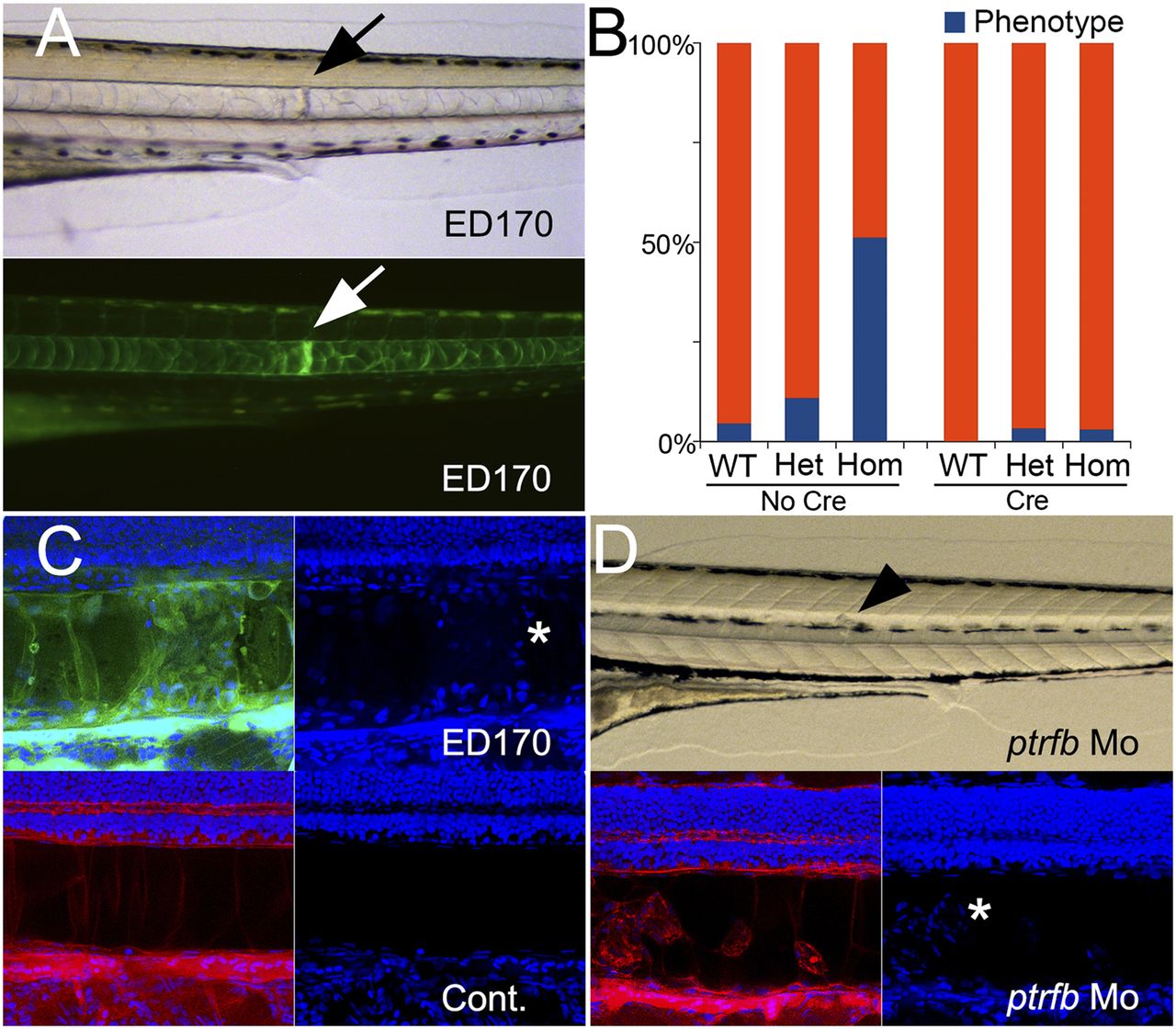
Phenotype associated with the ptrfb/ED170 mutant line. (A) In homologous ptrfb/ED170 mutant embryos, indentations in the notochord are observed (arrows). Transmitted light (top) and GFP fluorescence (bottom) images are presented. (B) Graph representing the percentage of embryos, wild-type (WT), heterozygous (Het), or homozygous (Hom) for the ED170 insertion, presenting the described phenotype (blue) in uninjected (No Cre; n = 354) and in Cre mRNA-injected backgrounds (Cre; n = 126). (C) Indentations in the ED170 mutant background (ED170; top panels) correspond to nuclei-enriched regions in the notochord (asterisk) that in controls remain nuclei-free (Cont.; lower panels). (D) In morpholino-injected embryos targeting ptrfb, indentations (black arrowhead) that correspond to nuclei-enriched regions in the notochord (asterisk) are also detected. Confocal images are marked in green for GFP, red for rodamin-phalloidin/actin staining, and blue for DAPI/nuclei staining.



