


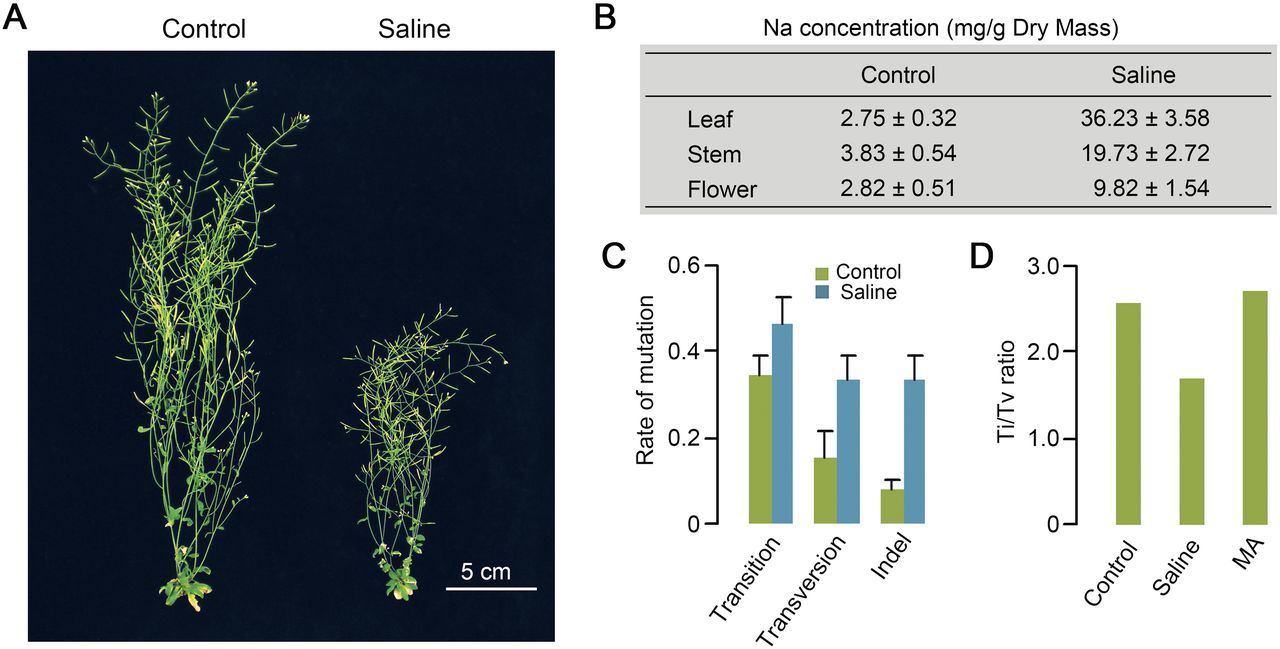
The morphological, physiological, and mutational effects of saline soil on A. thaliana. (A) Retarded growth of 10-wk-old A. thaliana (Col-0) plants growing on Saline (versus Control) soil. (B) Sodium (Na) content in rosette leaves (Leaf), inflorescence stems (Stem), and flowers with immature siliques (Flower) of four 8-wk-old plants grown in Control or Saline soil. Results are triplicate measurements of two biological replicates. (C) Rates (per genome per generation) of Transition, Transversion, and Indel (1–226 bp) (Supplemental Table S3) mutations accumulated in lineages grown for 10 successive generations on Saline or Control soil. Error bars represent standard error of the mean. (D) Transition/Transversion ratios (Ti/Tv) of single base substitutions accumulated in lineages grown for 10 successive generations on Control or Saline soil. For comparison, the Ti/Tv ratio characteristic of mutations accumulating in Control soil in a previous experiment (MA) is also shown (Ossowski et al. 2010).



