


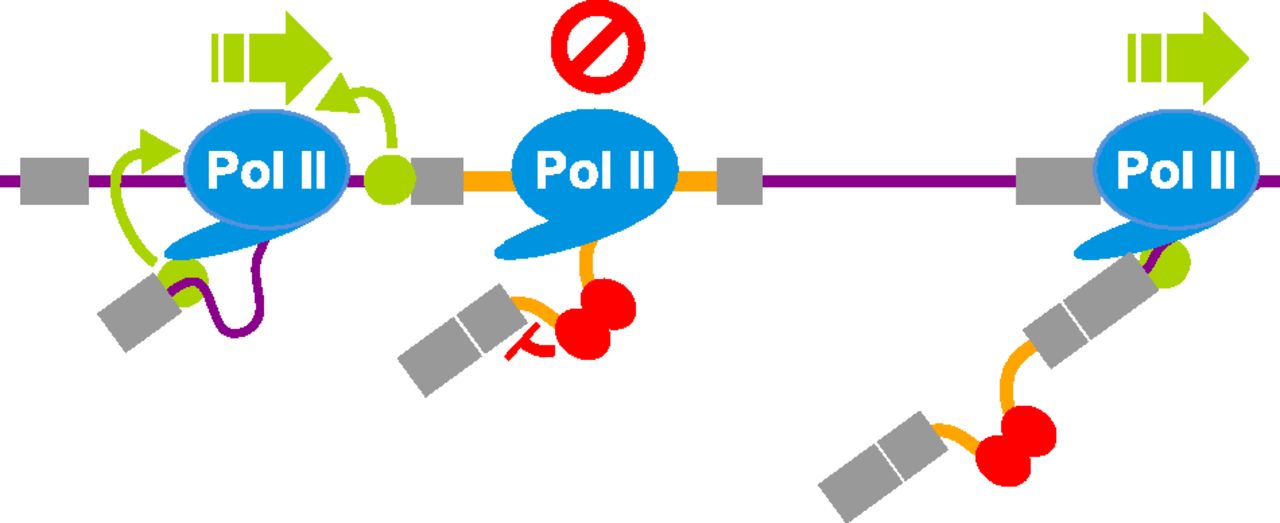
Mechanistic model for gene regulation via coupling between IR and RNA Pol II elongation. Inaccurate cell/tissue-specific transcription leads to low levels of expression and reduced recruitment of splicing factors to nascent transcripts. Weak splice sites and/or other cis features associated with retained introns leads to their retention. Binding of basal splicing components such as U1 snRNP (green circle) to the 5′ splice site of constitutive introns promotes Pol II elongation (Fong and Zhou 2001; Alexander et al. 2010), whereas the absence of recruitment of such factors promotes IR and reduces RNA Pol II elongation. Reduced Pol II elongation may further promote and commit introns to retention by favoring binding of splicing repressive factors (red ovals).



