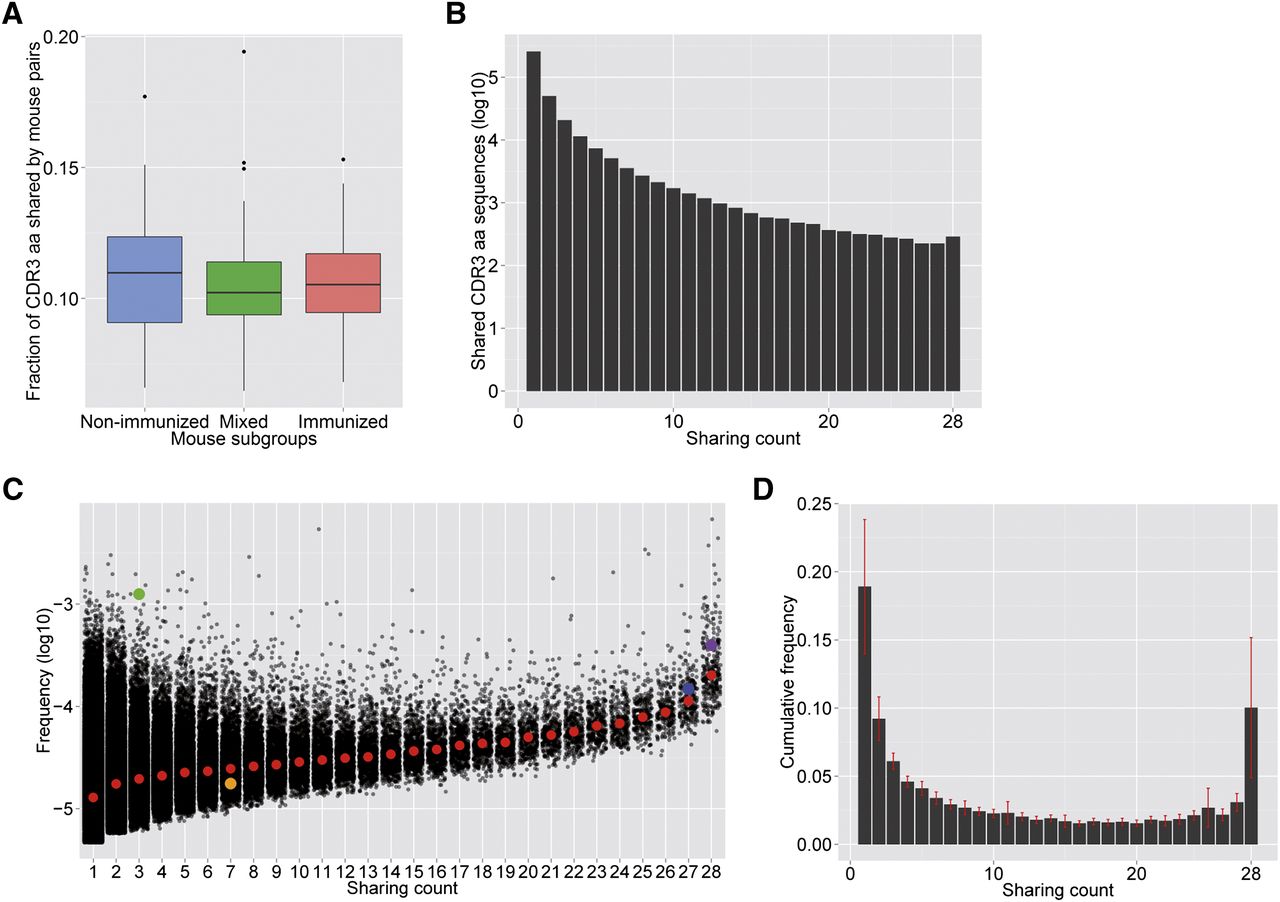
Analysis of the TCRβ repertoire of 28 C57BL/6 mice reveals a highly shared subset of CDR3 aa sequences present at relatively high frequencies. (A) Boxplot presentation of sharing between pairs of mice separated into non-immunized, immunized, and mixed (immunized/non-immunized) pairs; no significant differences are seen between the groups. (B) The number of CDR3 aa sequences found in each sharing category; 2.5 × 10⁵ sequences (∼69%) are private (found in only one mouse); 289 sequences (∼0.08%) are public (found in all 28 mice). (C) Mean frequencies of all CDR3 aa sequences as a function of their sharing level. Each black dot represents the mean frequency of a single aa sequence in all the mice that share this sequence. The red dots show the median value for each sharing category. The colored dots refer to the four sequences shown in Figure 2B. (D) Normalized cumulative frequencies of the sequences from C, in each sharing category. Private CDR3 sequences account for 19% ± 5% of all sequences in each sample; the 289 public sequences account for 10% ± 5% of all sequences in each sample.