


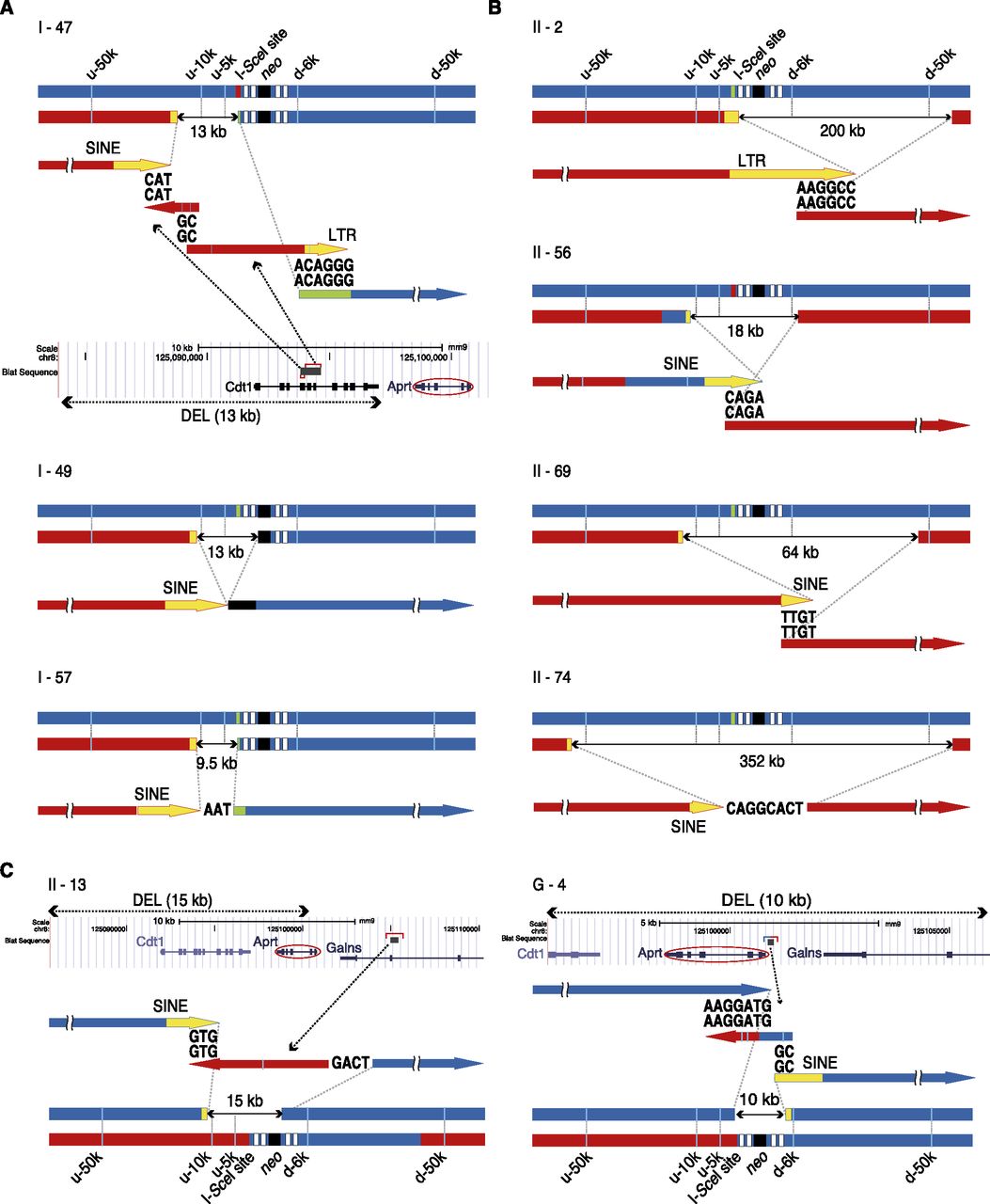
Schematic diagrams of DEL-associated LOH identified at the Aprt locus in Blmtet/tetAprtneo/+ ES cell clones that were subjected to transient BLM suppression and DSB induction. High-resolution array-CGH and a high-density SNP panel (Supplemental Table S1), followed by direct sequencing of the rearrangement breakpoints, were used. (Thick blue bar) B6-derived chromosome 8. (Thick red bar) 129-derived chromosome 8. (Black rectangle) neo-resistance gene cassette. (White rectangles) Exons of the Aprt gene. Blue (B6) and red (129) arrows represent a magnified view of the breakpoint boundaries. The direction of the arrows corresponds to chromosomal orientation from centromere to telomere in the mouse reference genome sequence (NCBI Build 37/mm9). Yellow segments represent genomic repetitive sequences such as a short interspersed nuclear element (SINE) or long terminal repeat (LTR) retrotransposon. Light green segments represent part of the I-SceI recognition site. Microhomology regions, shared by the two ends of the junctions, are indicated by double-stranded DNA sequences, while short DNA insertions are indicated by ssDNA sequences. (A,B) Clones carrying DEL on the 129 allele (129-DEL) associated with interhomolog crossover (CO) of the distal B6 chromosome (A) or noncrossover (NCO) (B). (C) Clones carrying DEL on the B6 allele (B6-DEL). The lengths of the genomic segments are depicted arbitrarily. Short 129-derived (red) segments embedded within the B6-derived (blue) chromosomes (A, I-47; B, II-56) represent interhomolog NCO events that copy the wild-type segment to the I-SceI DSB site, probably by gene conversion.



