


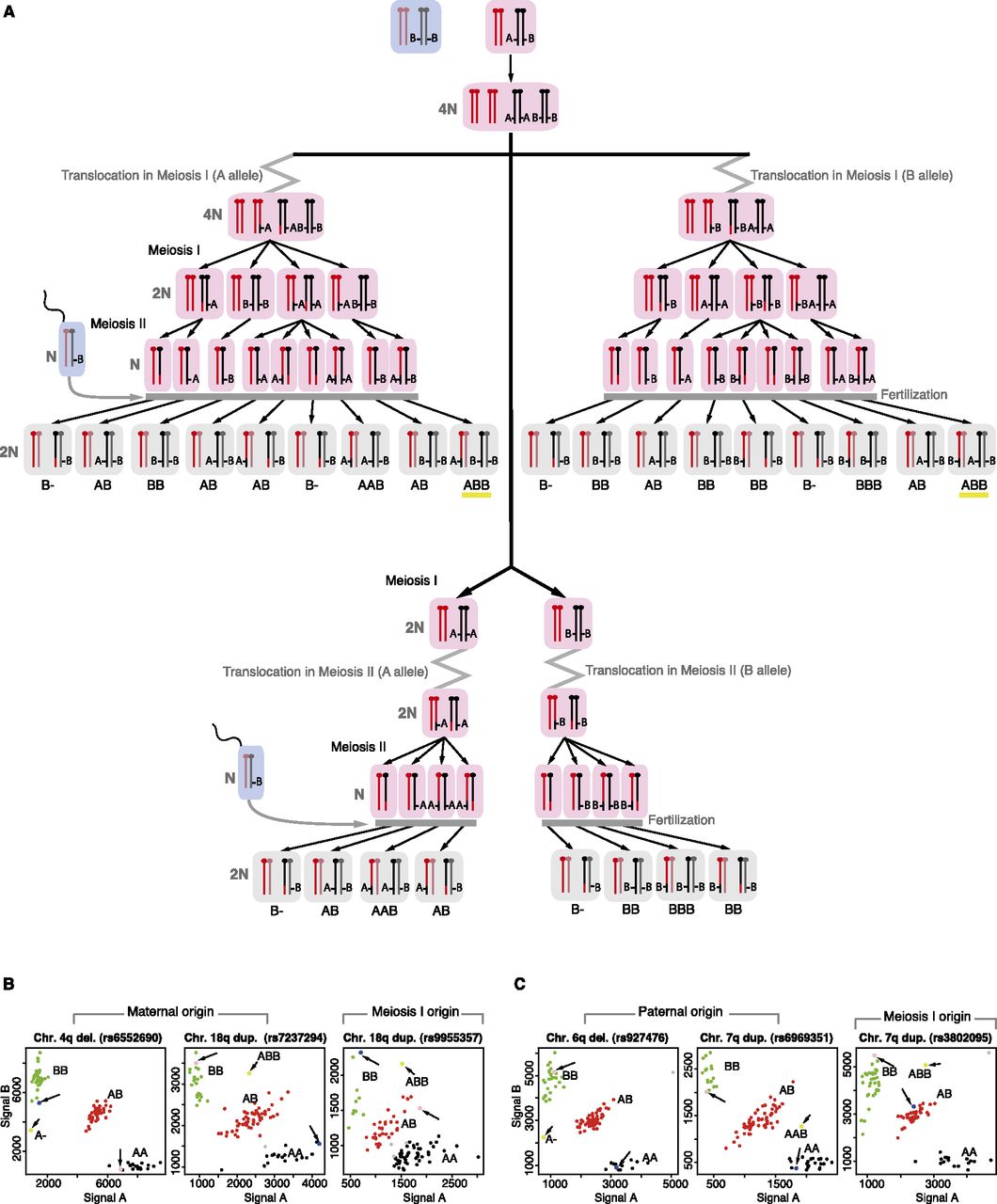
Resolving meiotic origin of de novo unbalanced translocations. (A) A schematic illustration of different segregants following a meiotic I or II de novo unbalanced translocation event. (Rose rectangles) Maternal gametes; (blue rectangles) paternal gametes; (gray rectangles) the zygote. In this figure, the translocation event occurs in the maternal gamete. Within those rectangles, the black and red colors represent maternal chromosomes, and dark gray and dark pink colors represent paternal chromosomes. To discriminate a meiosis I from a meiosis II event, maternal heterozygous SNPs and paternal homozygous SNPs are considered. The presence of ABB SNP-calls (underlined with yellow color) present in the duplicated region of the translocated chromosomes can only be the consequence of a premeiotic or a meiotic I event. (B) The SNP plots of parental homozygous SNPs demonstrate that both the deletion and duplication (left two panels) are of maternal origin, while the analysis of the maternal heterozygous and paternal homozygous SNPs demonstrates a premeiotic or meiosis I origin (right panel). (C) The SNP plots of parental homozygous SNPs demonstrate that both the deletion and duplication (left two panels) are of paternal origin, while the analysis of the paternal heterozygous and maternal homozygous SNPs demonstrates the premeiotic or meiosis I origin (right panel). Green, red, black, and gray dots represent controls with a BB, AB, AA, and NoCall genotype, respectively. The pink and blue dots represent the genotypes of the mother and father and the longer arrows point to them. The yellow dots indicate the genotype call of the index patient and are indicated by the shorter arrow. The SNP plots of parental homozygous SNPs demonstrate that the duplication (left two panels) is of maternal origin, while the deletion (right panel) is of paternal origin.



