


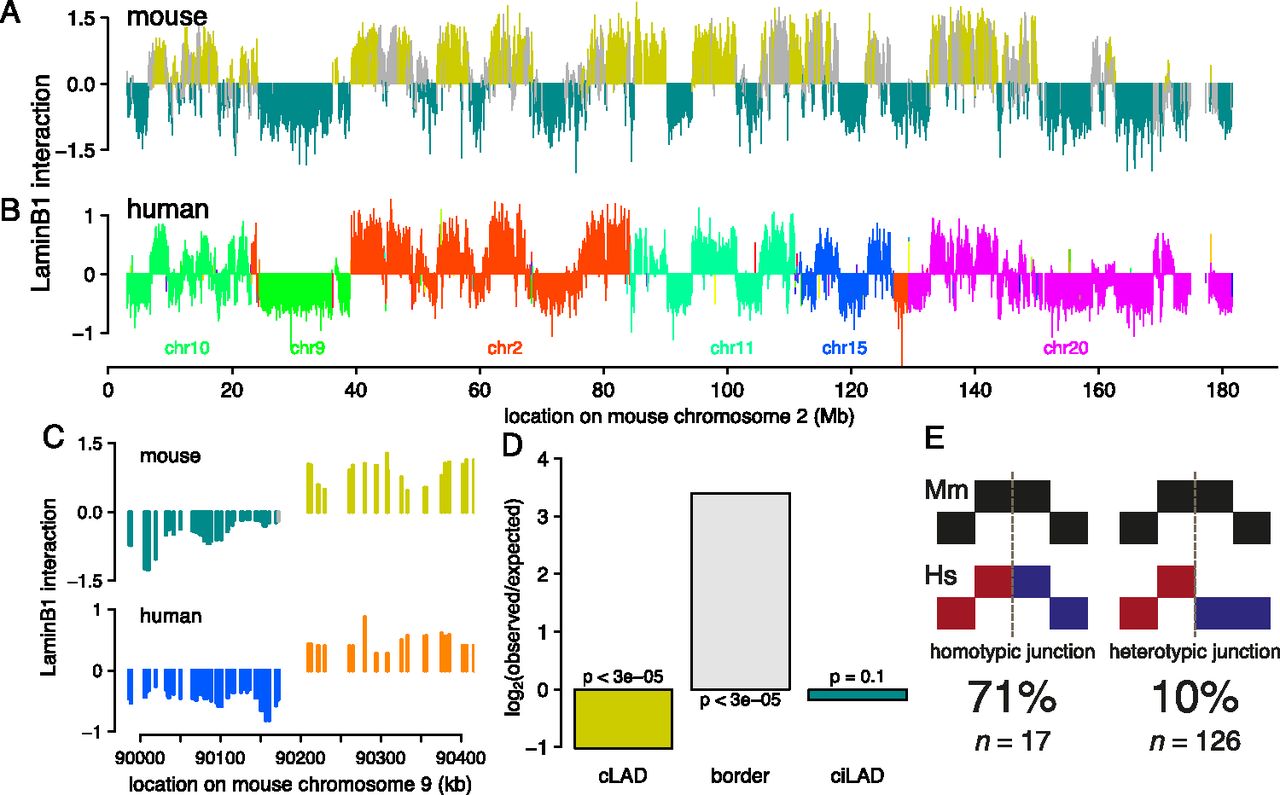
Core architecture is highly conserved between mouse and human. (A) Map of NL interactions in mouse ESCs for chromosome 2 ([mustard] cLADs; [cyan] ciLADs; [gray] fLADs), and (B) in human ESCs for the corresponding syntenic regions (each color denotes a different human chromosome). (C) Example of co-occurrence of synteny breakpoint and LAD border. Color scheme as in A and B. (D) Ratio of observed and expected occurrence of breakpoints in cLADs, ciLADs, or their border regions. (E) Cartoon representations of homotypic and heterotypic junctions; breakpoints indicated by dashed gray lines. All breakpoints in constitutive regions (n = 143) were scored based on whether they coincide with an LAD in mouse or human.



