


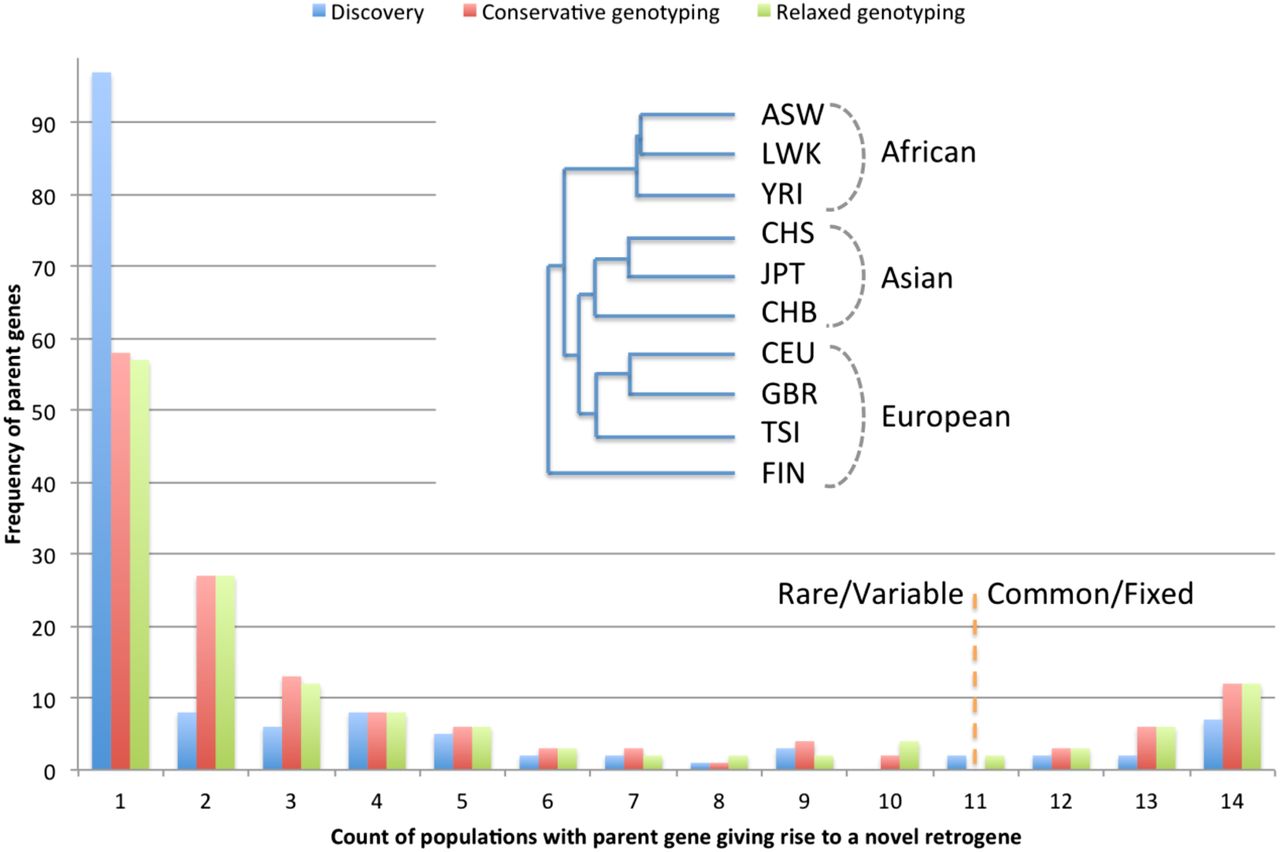
Frequency of novel retroduplications by populations. Most of the novel retroduplications are discovered in only one population (due to conservative calling) but are present in a few more as evident from genotyping. The phylogenetic tree was constructed based on the overlap of novel retroduplications between different populations. The tree shows that, except in one case, populations separate perfectly by continental groups. Outlier clustering of the Finnish population (FIN) is likely due to its distinct data properties allowing discovery of more unique retroduplications (see text). Admixed populations and the Iberian population (with just a few sequenced individuals) were excluded from phylogenetic analysis.



