


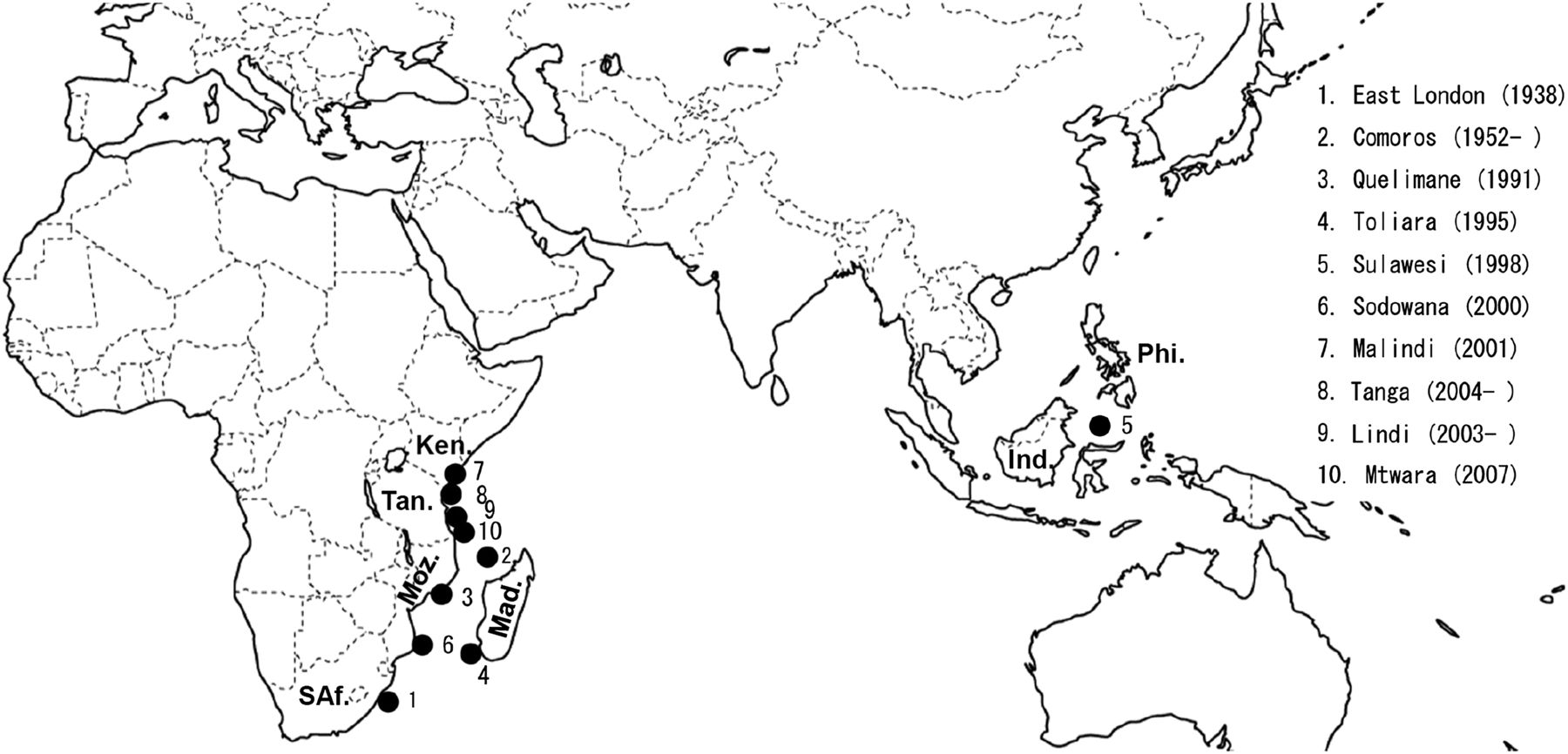
Figure 1.
Captured or observed coelacanth individuals. The location numbers indicate the order of the captures. The location names and the dates are summarized at the right of the map. Although most of the coelacanths were recorded in the western Indian Ocean, some coelacanths were also captured and observed off the coast of Manado, Sulawesi. The names of the key African and Indonesian countries are indicated as follows: Kenya (Ken.), Tanzania (Tan.), Mozambique (Moz.), Madagascar (Mad.), South Africa (SAf.), Indonesia (Ind.), and the Philippines (Phi.).



