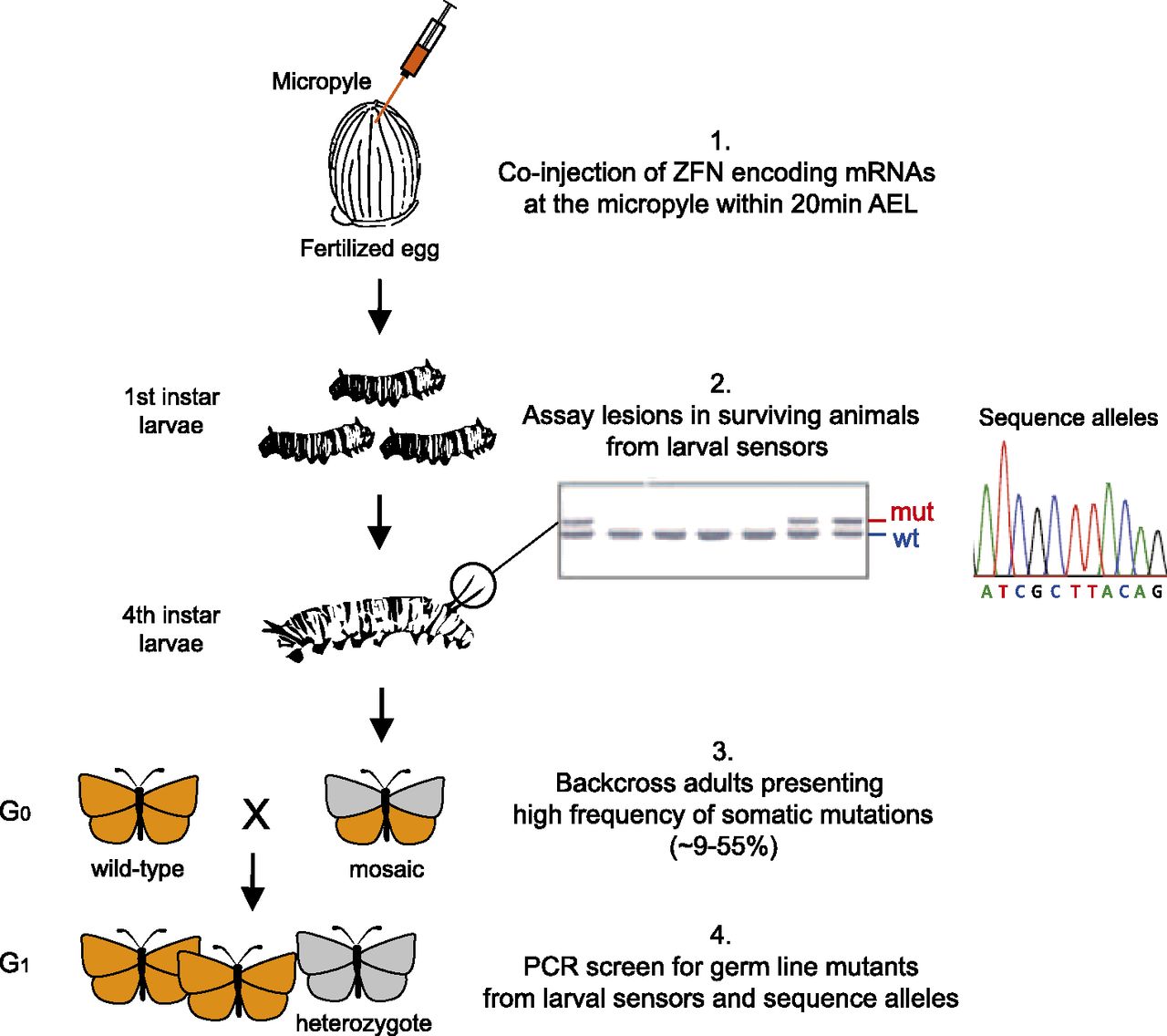
Injection and screening strategy for recovering germline-transmitted ZFN-induced mutants. (1) To target the first nuclei during embryonic development, fertilized eggs are injected with ZFN-encoding mRNAs within 20 min after egg laying (AEL) at the micropyle, the region at which the sperm is transferred and fertilization occurs in holometabolous insects. (2) Surviving larvae are reared to the fourth instar larvae and then are subjected to noninvasive genotyping to screen for mosaics presenting a high frequency of targeting in somatic cells. The presence of lesions is tested by restriction endonuclease assay from fleshy filaments of a single animal (larval sensors at the anterior thorax) whose removal does not alter the butterfly's survival or fertility, and the mutated alleles are sequenced. Of note, for species that do not possess external structures, genotyping could alternatively be performed using hemolymph extracts. (3) To reduce breeding efforts, only mosaic larvae targeted with high frequency in somatic cells are reared to adulthood (mixed orange and gray) and backcrossed to wild-type butterflies (orange). (4) The G1 progeny are screened for targeted mutations as in 2.