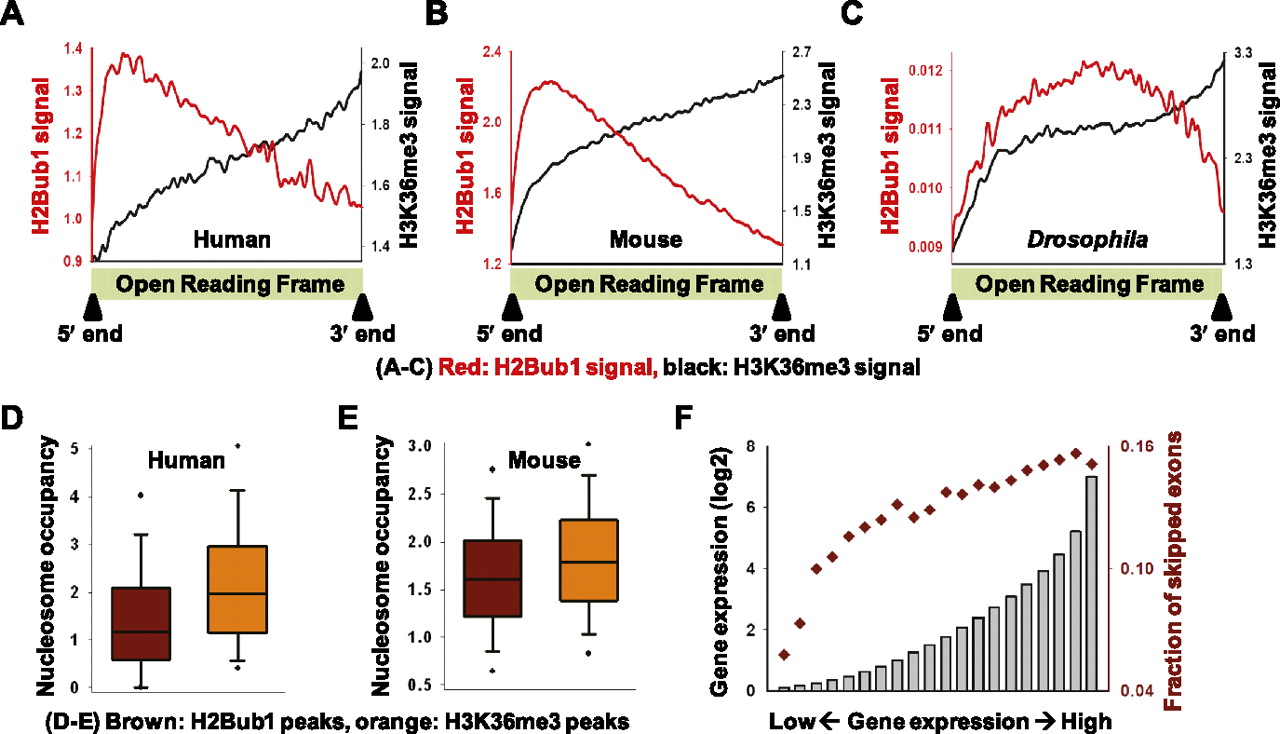
Unique properties of H2Bub1 in mammals. (A–C) Average H2Bub1 and H3K36me3 patterns of ORF regions in various organisms are shown. In mammals, H2Bub1 density was high at the 5′ end regions and rapidly decreased along the transcribed regions (red lines). In Drosophila cells, in contrast, H2Bub1 was enriched in the central ORF regions. (D,E) Boxplots of nucleosome occupancy for H2Bub1 and H3K36me3 peaked regions. The P-values between H2Bub1 and H3K36me3 were zero for both human and mouse, as assessed using the KS test. (F) Average gene expression levels (bar graph) and fractions of skipped exons (red diamonds) are shown for 20 subgroups equally divided according to their gene expression levels.