


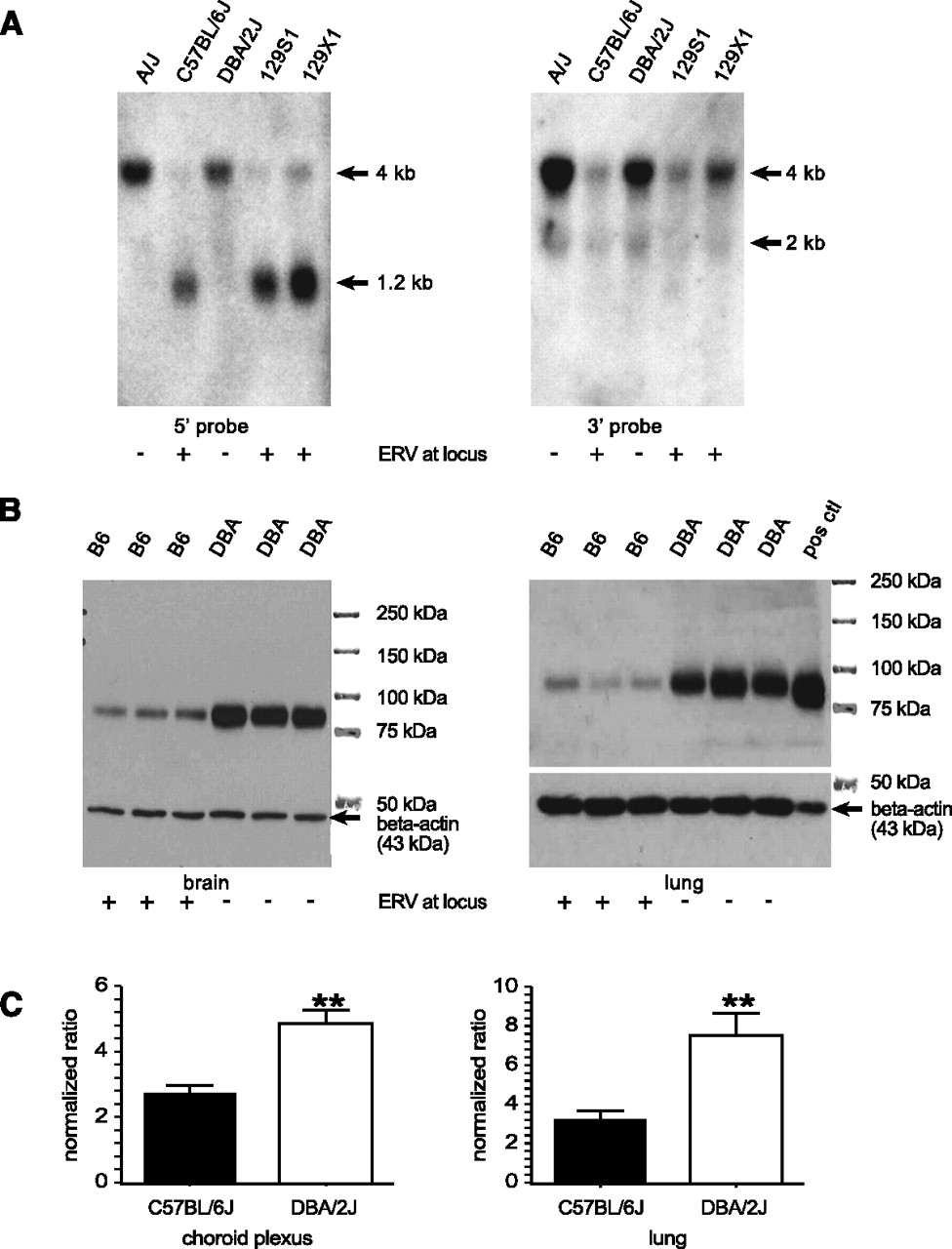
An intronic ERV polymorphism disrupts Slc15a2 expression and function. (A) Northern blots. Equivalent amounts (10 mcg each) of total RNAs from brains pooled from several individuals from the indicated lineages were electrophoresed. Northern blots were probed with 5′ (left) and 3′ (right) probes from Slc15a2. (Left) Truncated transcripts (1.2 kb, arrow) correlate with the presence of a polymorphic ERV in B6, 129S1, and 129X1 strains but absent from the others. The full-length (nonterminated, 4 kb) Slc15a2 transcript is expressed robustly in the absence of the ERV integrant in A/J and DBA mice. (Right) No appreciable downstream fusion transcript (2 kb) was detected, although it was identified by qRT-PCR (data not shown). Loading controls are shown in Supplemental Figure 3A. (B) Western blots. Protein extracts from individual brains (left) and lungs (right) from B6 and DBA mice were electrophoresced and probed for PEPT2 using protein-specific antiserum. (C) Functional assay in vivo. Accumulation of radiolabeled Gly-Sar dipeptide substrate was measured in choroid plexus and lung from B6 versus DBA mouse lineages, indicating significantly different PEPT2 functional activities (asterisks).



