


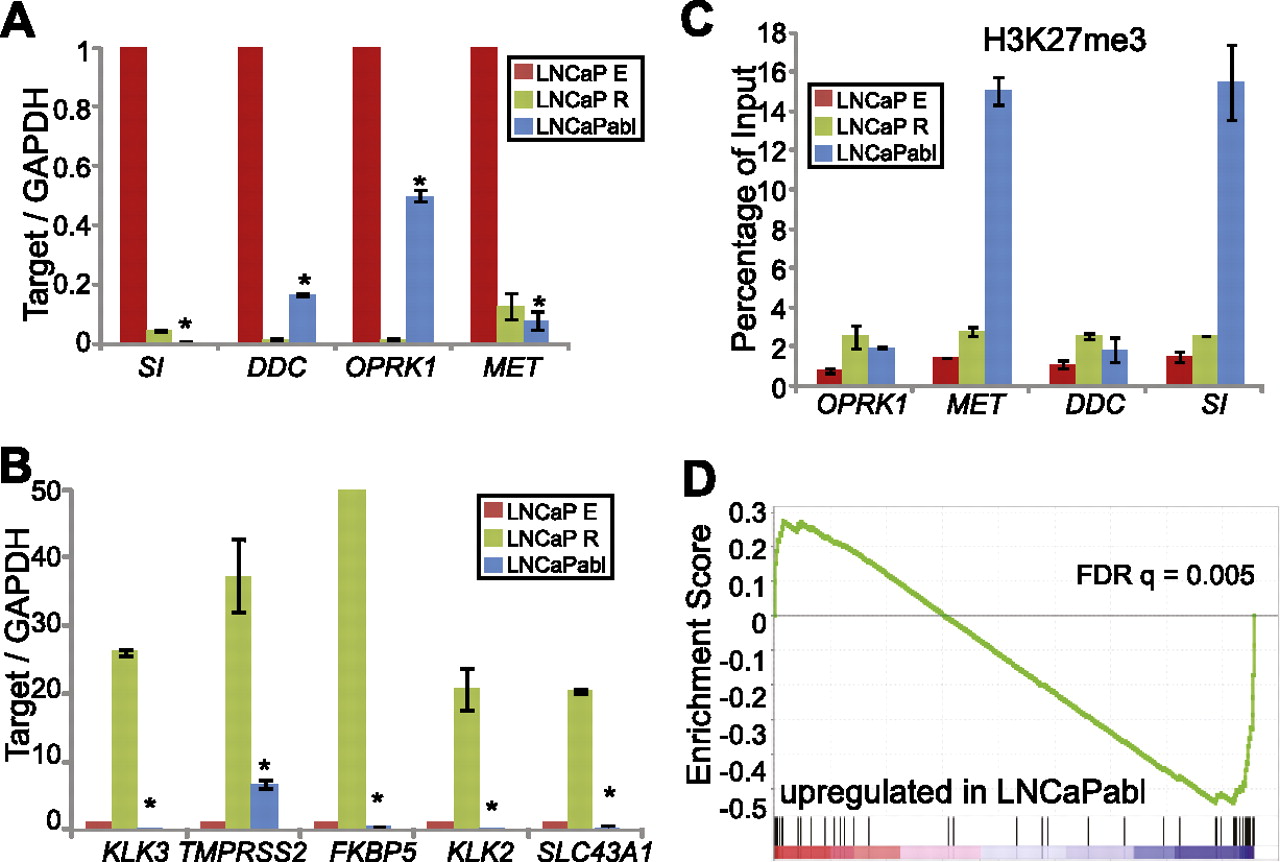
AR repression is maintained by Polycomb in castration-resistant prostate cancer. (A) QRT-PCR analysis of AR-repressed and -induced genes in androgen-sensitive LNCaP and castration-resistant LNCaP-abl cells. LNCaP cells were hormone-starved for 72 h before treatment with ethanol (E) or androgen (R) for 48 h. LNCaP-abl cells were maintained in a hormone-free medium. Target gene expression was first normalized to GAPDH and then to its level at LNCaP treated with ethanol. Error bars: n = 3, mean ± SEM. (B) QRT-PCR analysis of AR-induced genes in androgen-sensitive LNCaP and castration-resistant LNCaP-abl cells. (C) H3K27me3 modification on AR-repressed genes. LNCaP cells were hormone-starved for 72 h and treated with ethanol (E) or androgen (R) for 16 h before ChIP experiments. LNCaP-abl cells were maintained in a hormone-free medium. Error bars: n = 3, mean ± SEM. (D) GSEA showing enrichment of AR-repressed genes with genes down-regulated in LNCaP-abl compared with LNCaP. Gene expression in LNCaP and LNCaP-abl under an androgen-depleted environment was determined. Differentially expressed genes were ranked from up-regulated in LNCaP-abl to down-regulated in LNCaP-abl relative to LNCaP.



