


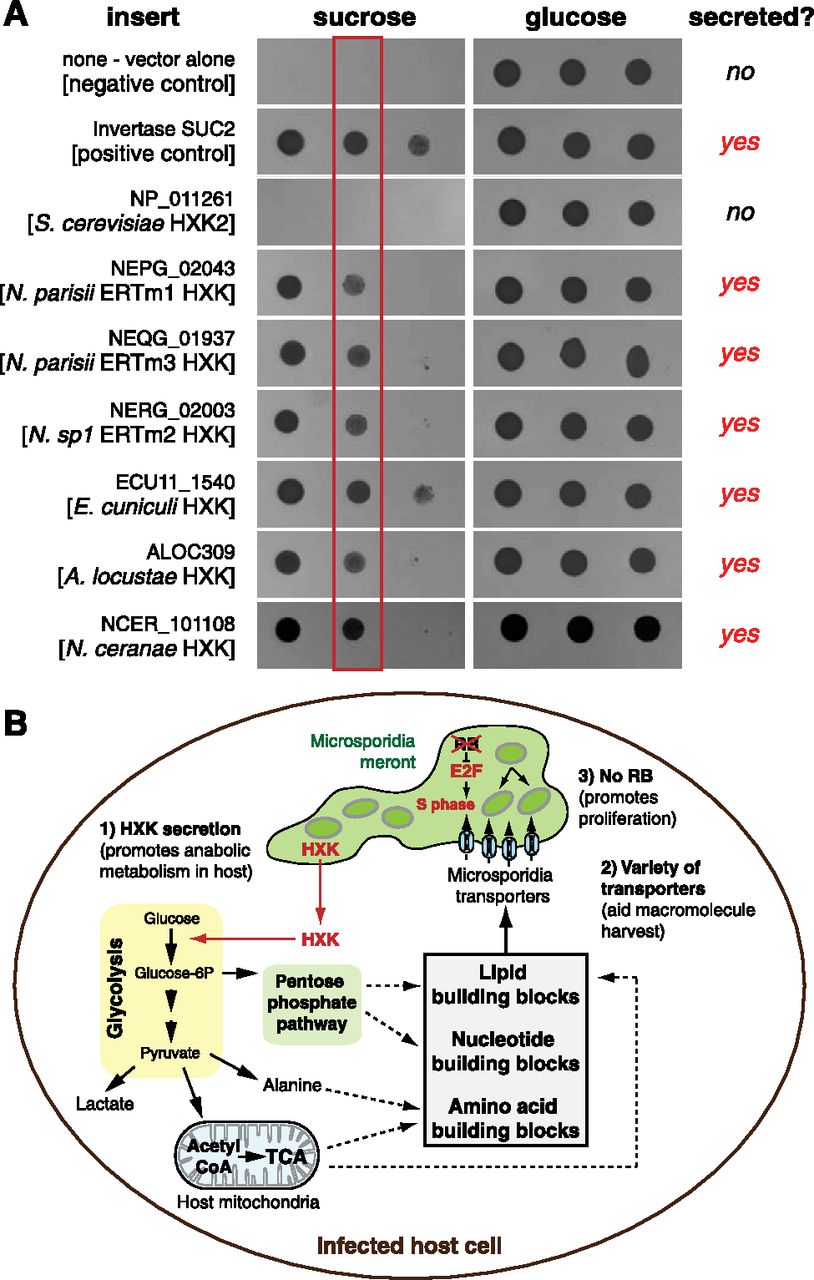
Microsporidia hexokinase secretion signals can direct protein trafficking through the yeast secretion system. (A) A yeast secretion trap system was used to test the ability of microsporidia hexokinase secretion signals to direct secretion in a fungal system. Tenfold serial dilutions of S. cerevisiae strains containing candidate signal sequences were grown on media containing either sucrose (left) or glucose (right). Growth on sucrose indicates a functional signal sequence (boxed in red). (B) Model for evolutionary events that enable rapid intracellular growth of microsporidia: (1) hexokinase acquired a secretion signal sequence, likely directing this enzyme into the host cell, where it can increase production of amino acids, lipids, and nucleotides; (2) transporters were acquired, which can import host-synthesized nucleosides and nucleotides into the pathogen meront; and (3) RB was lost, which we speculate could lead to a rapid, but mistake-prone, cell cycle, with concomitant DNA and RNA synthesis supported by host-derived nucleotides.



