


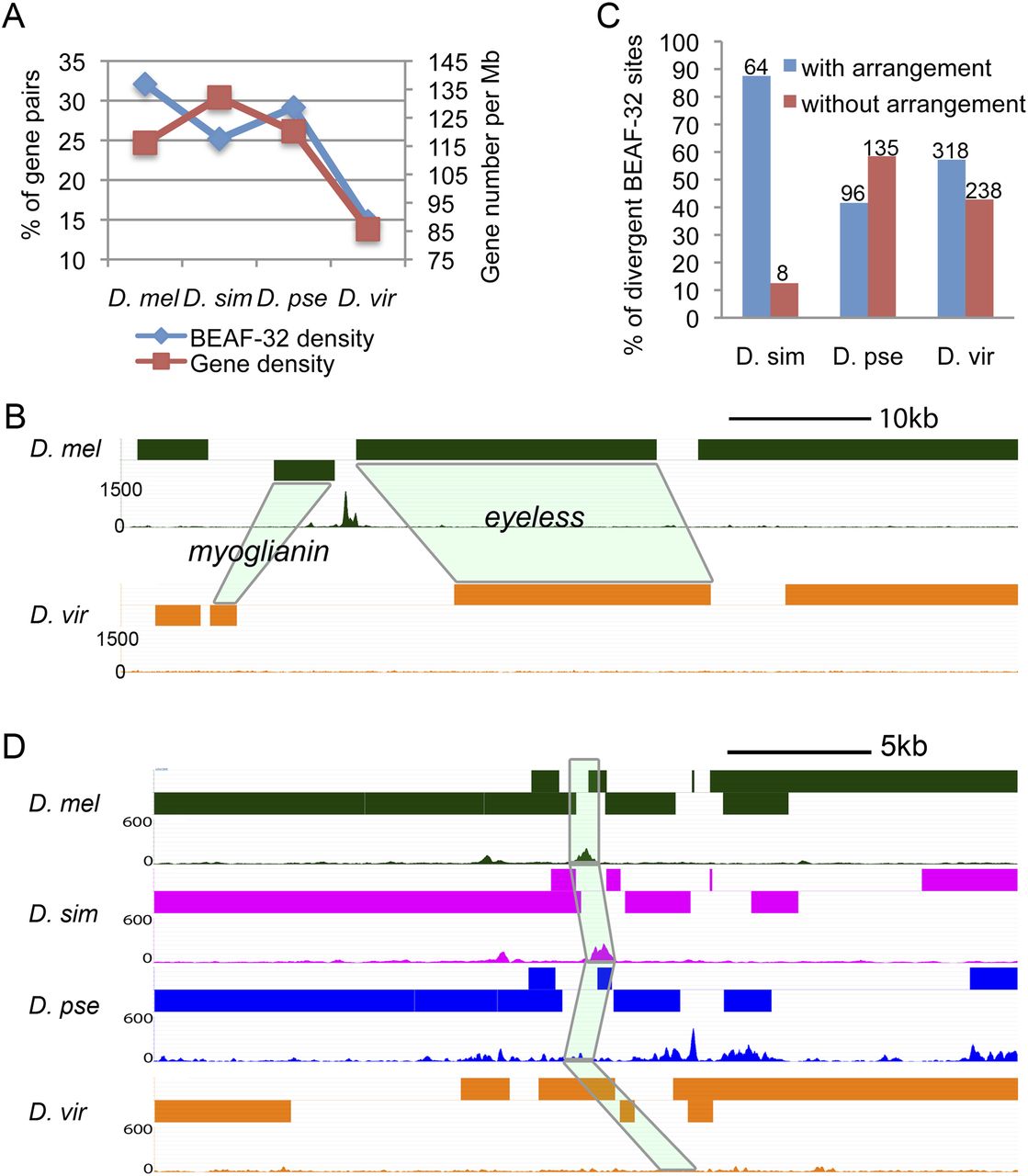
Changes in BEAF-32 binding correlate with changes in genome organization and function. (A) BEAF-32 density decreases as gene density declines. (Left y-axis) Percentage of gene pairs containing BEAF-32 with respect to all well-mapped gene pairs and is a measure of BEAF-32 density. (Right y-axis) Number of genes per megabase as a measure of gene density. (B) Arrangement of the myoglianin and eyeless genes and location of BEAF-32 binding sites. Light-green shadowing indicates the orthologous genes in D. virilis. (C) Percentage of divergent BEAF-32 binding sites that either associate or do not associate with chromosome rearrangement between D. melanogaster and the species listed. The numbers above the bar indicate the number of cases in each category. (D) An example of gene arrangement and location of BEAF-32 binding sites in a region whose mutation affects body size in D. melanogaster is shown for four different species. The mutation affecting body size results in alteration of sequences in the intergenic region encompassing the BEAF-32 binding site in D. melanogaster. Light-green shadowing represents the four orthologous regions in each of the Drosophila species.


