


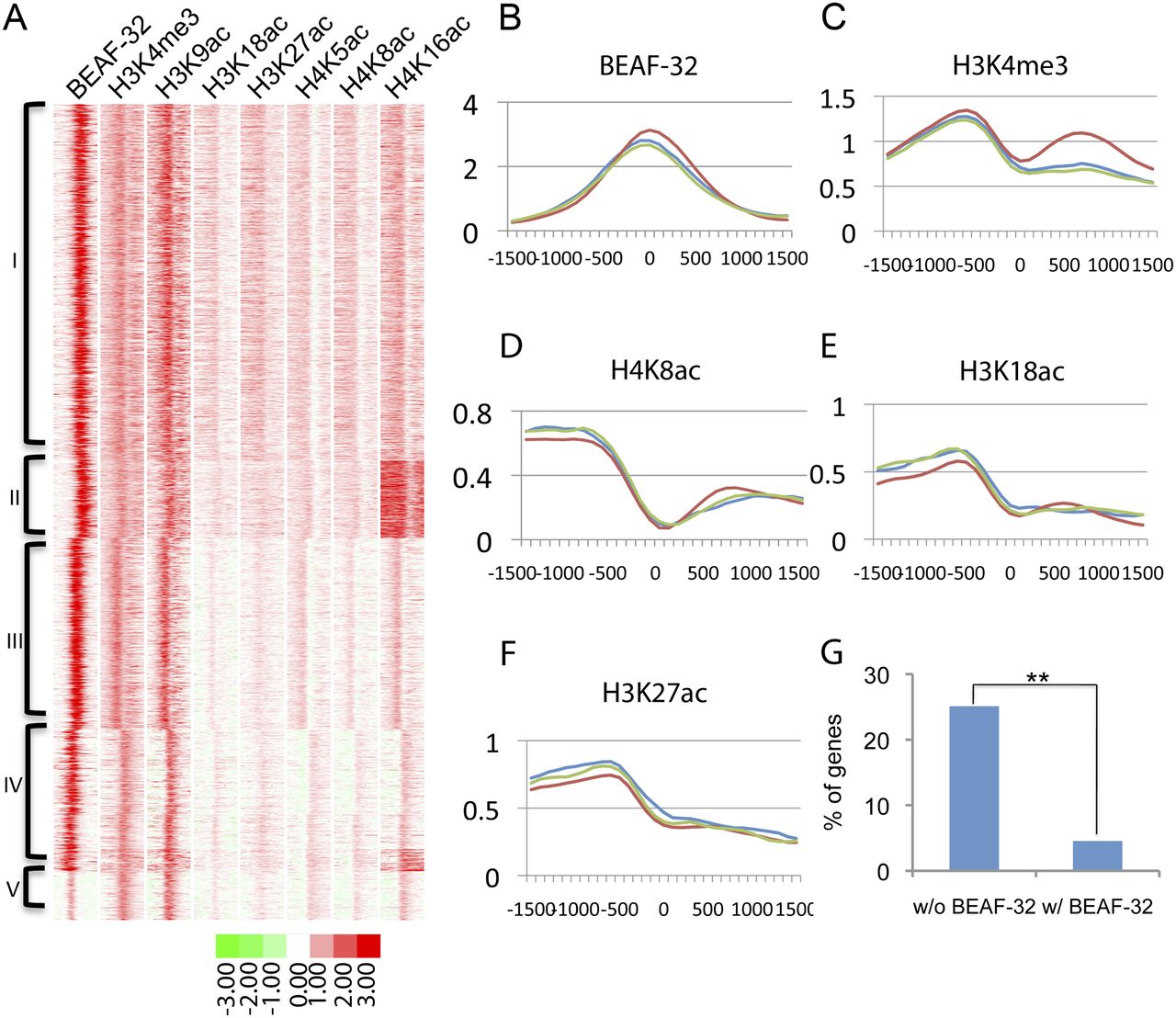
BEAF-32 separates close head-to-head gene pairs to achieve differential regulation of transcription. (A) Alignment and clustering of BEAF-32 and histone modifications in D. melanogaster S2 cells. All sites were identified and aligned using ChromaSig. Each lane represents a 3-kb region. Clusters I–V grouped here are clusters with BEAF-32 binding from Supplemental Figure S5. (B–F) Mean value of enrichment for sites in cluster I. Site 0 is the site where BEAF-32 is enriched. Each figure represents a 3-kb region flanking site 0. Each colored line represents a different type of gene pair arrangement case in cluster I: head-to-head (red), tail-to-head (blue), and head-to-tail (green). (G) Fraction of gene pairs whose expression changes significantly in the same up or down direction in Sox14 mutant animals. Changes are considered significant when the difference is at least threefold.


