


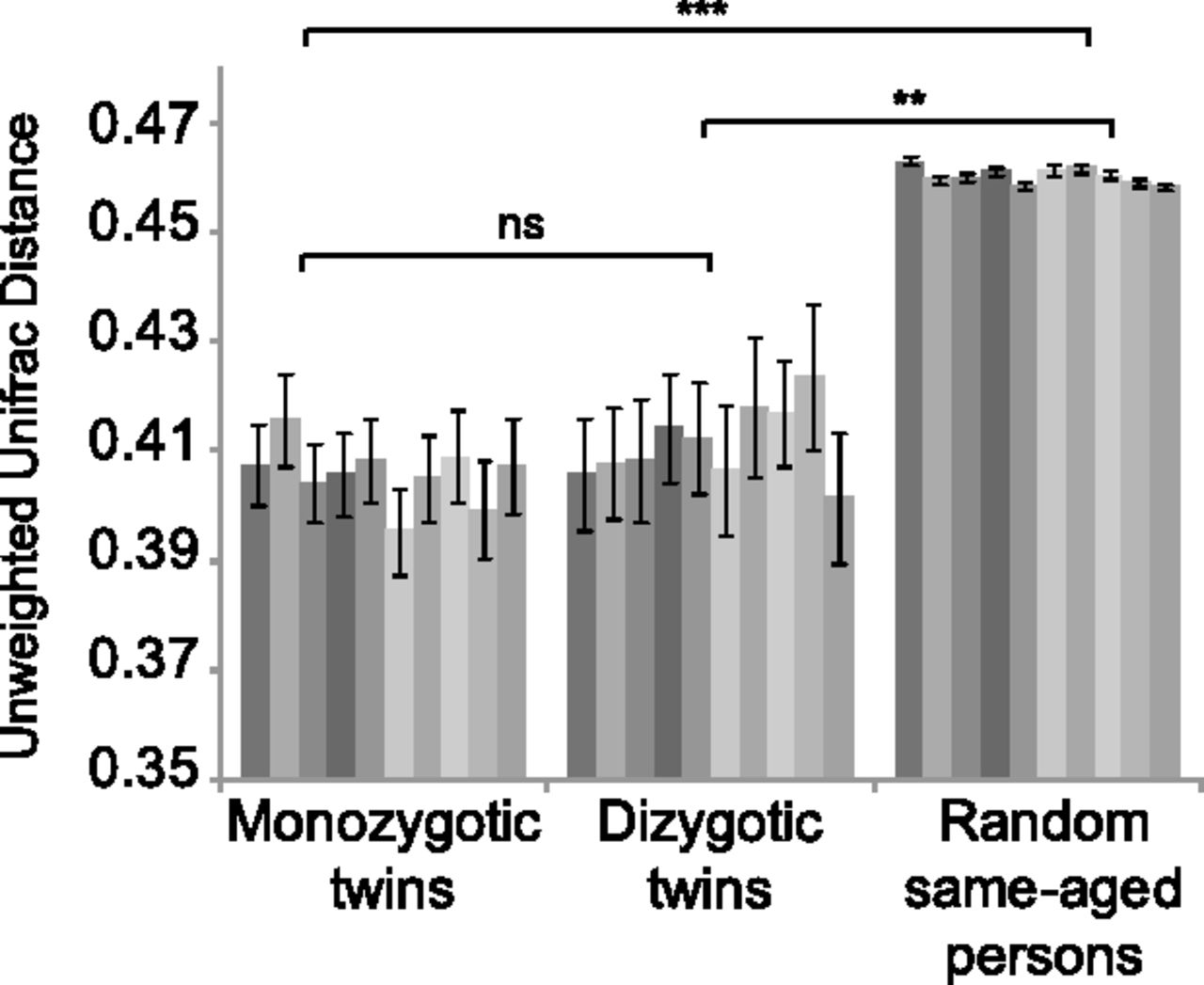
Genetic effect on the salivary microbiome at the ages of 12, 17, and 22 yr. Averaged pairwise unweighted UniFrac distances of same aged MZ (n = 59) and DZ (n = 39) twin pairs and same aged sample population (n = 7882 pairs) at ages 12–13, 17–18, and 22–24 (±SEM). The data set was randomly subsampled 10 times at a sequencing depth of 800 sequences/sample, and each subsampling is shown as a separate bar. The statistical analysis was a Mann-Whitney U-test. The P-value outcomes are denoted as follows: (ns) nonsignificant, (*) P < 0.05, (**) P < 0.01, (***) P < 0.001. The P-value of each permutation was recorded and the lowest significance level that has occurred in at least nine out of 10 rarefactions is presented.



