


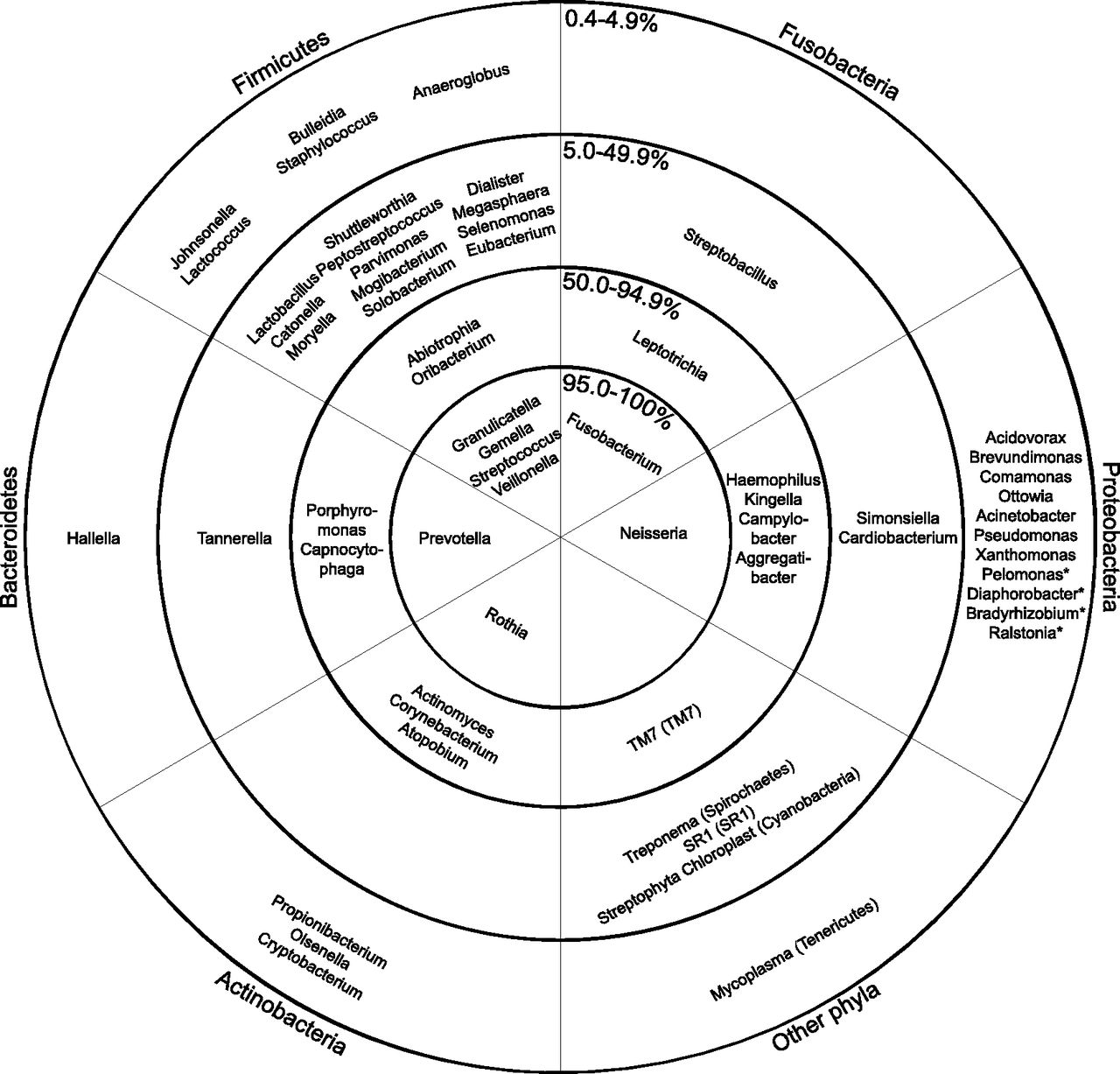
Figure 2.
Presence of bacterial genera based on occurrence in samples. Taxonomic identity is based on RDP classification (Cole et al. 2007). The rings represent the percentage of samples where a given genus was observed (0.4%–4.9% means that genus was found in 1–12 samples, 5.0%–49.9% means that genus was found in 13–131 samples, 50.0%–94.9% means that genus was found in 132–250 samples, and 95.0%–100% means that genus was found in 251–264 samples). The pie slices subdivide the chart into the various bacterial phyla. (*) Genera that have only been found in one sample.



