


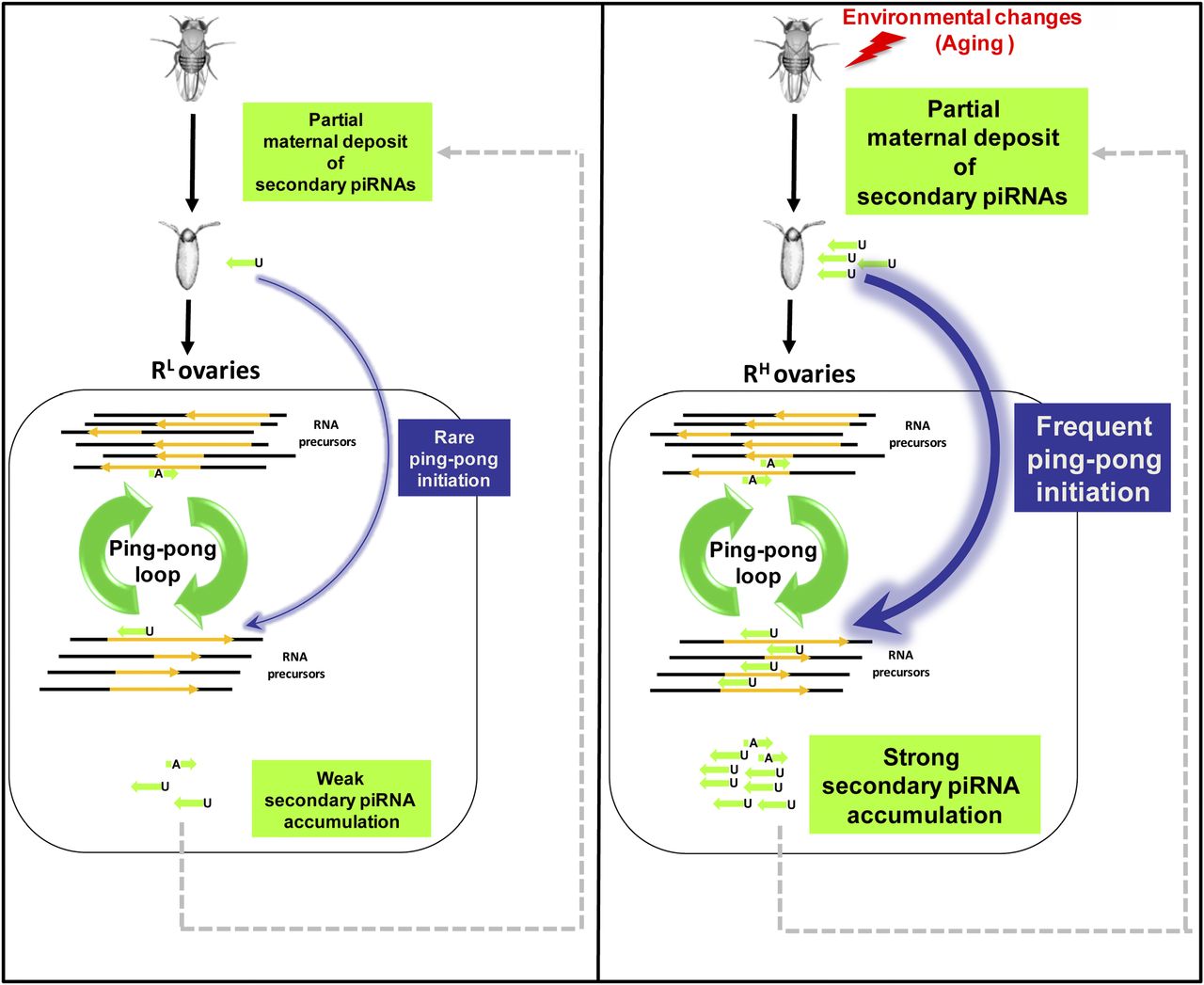
The amount of maternally deposited I-element piRNAs in eggs determines the amount of piRNAs in female ovaries. The left and right panels schematize the biogenesis of I-element piRNAs in the RL and RH stocks, respectively. Secondary antisense piRNAs (green arrows with uridine in the first position [1U]) are abundant in the eggs laid by aged ancestors, leading to frequent ping-pong loop initiation in ovarian germ cells (thicker blue arrow in the right panel) and, therefore, abundant ovarian secondary piRNA production and maternal piRNA deposition in the next RH generations (gray dashed line). The amount of the RNA precursors (black lines) that contain defective I-element fragments (orange arrows) is similar in both RL and RH stocks. The amount of secondary piRNAs accumulated in the ovary is therefore not limited by the amount of RNA precursors but by the amount of the maternally deposited piRNAs. Since the maternal deposit only partially reflects the secondary ovarian piRNA accumulation, the system progressively tends to the stable equilibrium of the RL stock if the environmental changes are stopped.


