


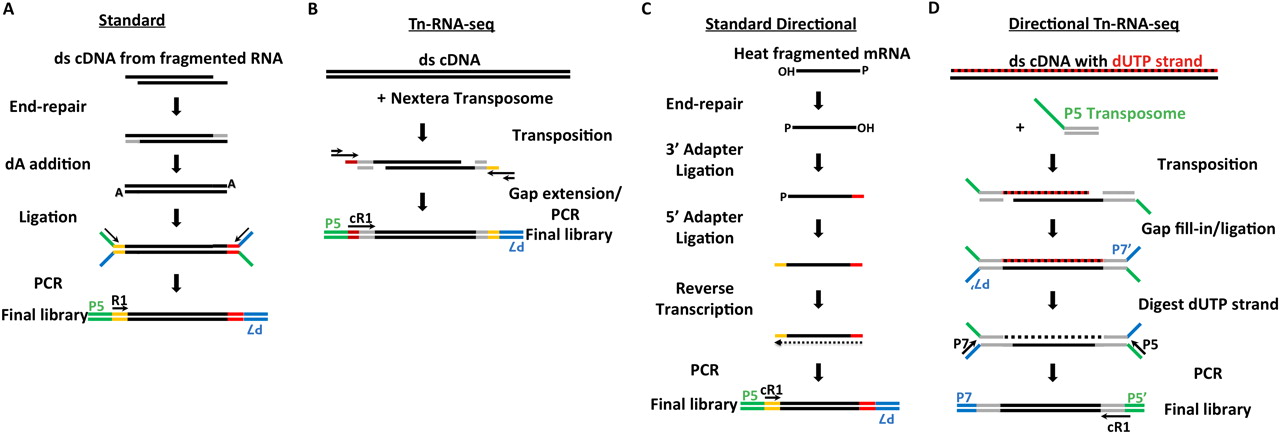
RNA-seq methods overview. (A) In the standard adapter ligation RNA-seq library construction protocol, double-stranded cDNA made from fragmented mRNA is subjected to end repair, dATP addition, adapter ligation, size selection, and PCR. (B) For the Tn–RNA-seq method described here, double-stranded cDNA is incubated with transposome (transposase complexed with transposon) and then undergoes PCR. (C) In the directional RNA ligation approach (standard directional), poly(A)-selected mRNA is fragmented with heat and end repaired. 3′ and then 5′ adapters are ligated onto single-stranded RNA before reverse transcription, followed by PCR. (D) The directional Tn–RNA-seq library construction described here starts with double-stranded cDNA, in which the second strand synthesized contains uracils instead of thymines. cDNA synthesis is followed by transposition of sequencing adapters, gap fill-in/ligation, USER digestion, and PCR. P5 and P7 correspond to Illumina cluster generation primers. R1 identifies the sequencing primer and cR1 indicates custom sequencing primer. (′) Reverse complement.



