


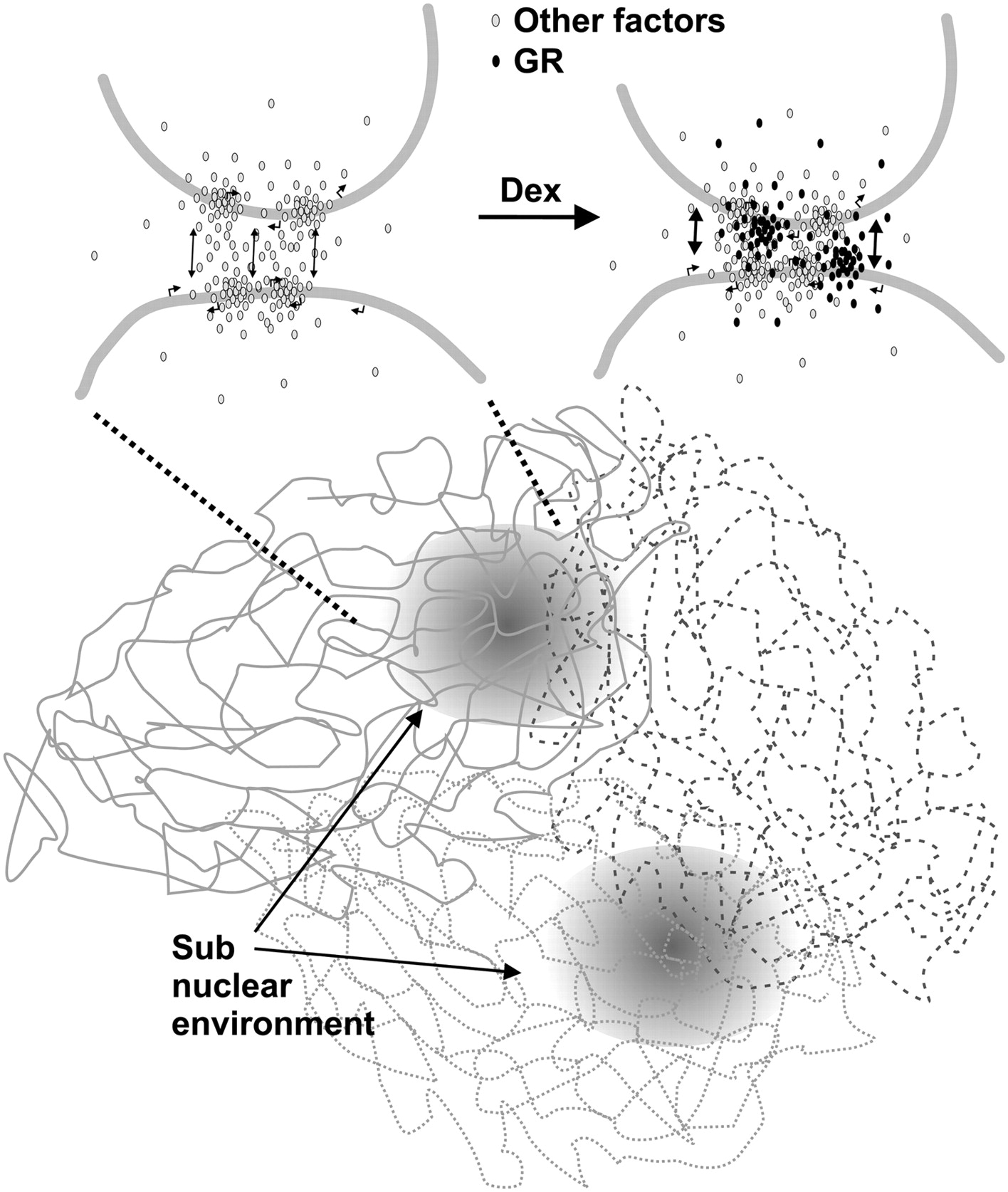
Model for the structure of subnuclear environments enriched for GR and other distal regulatory elements and active gene loci. Chromosomes of a mammalian cell are organized into territories in an interphase nucleus. Within the chromosome territories, regions enriched for regulatory sites and active genes are nonrandomly organized in localized environments. These DHS-rich spatial domains are likely to provide binding sites for transcription factors and chromatin-remodeling proteins (gray), further reinforcing the organization and maintaining a high local concentration of these proteins. Although cross-linking protocols immobilize interacting regions, the local interactions are presumed to be highly dynamic. Hormone-activated GR (black) may increase the frequency of these dynamic contacts in preexisting spatial environments.



