


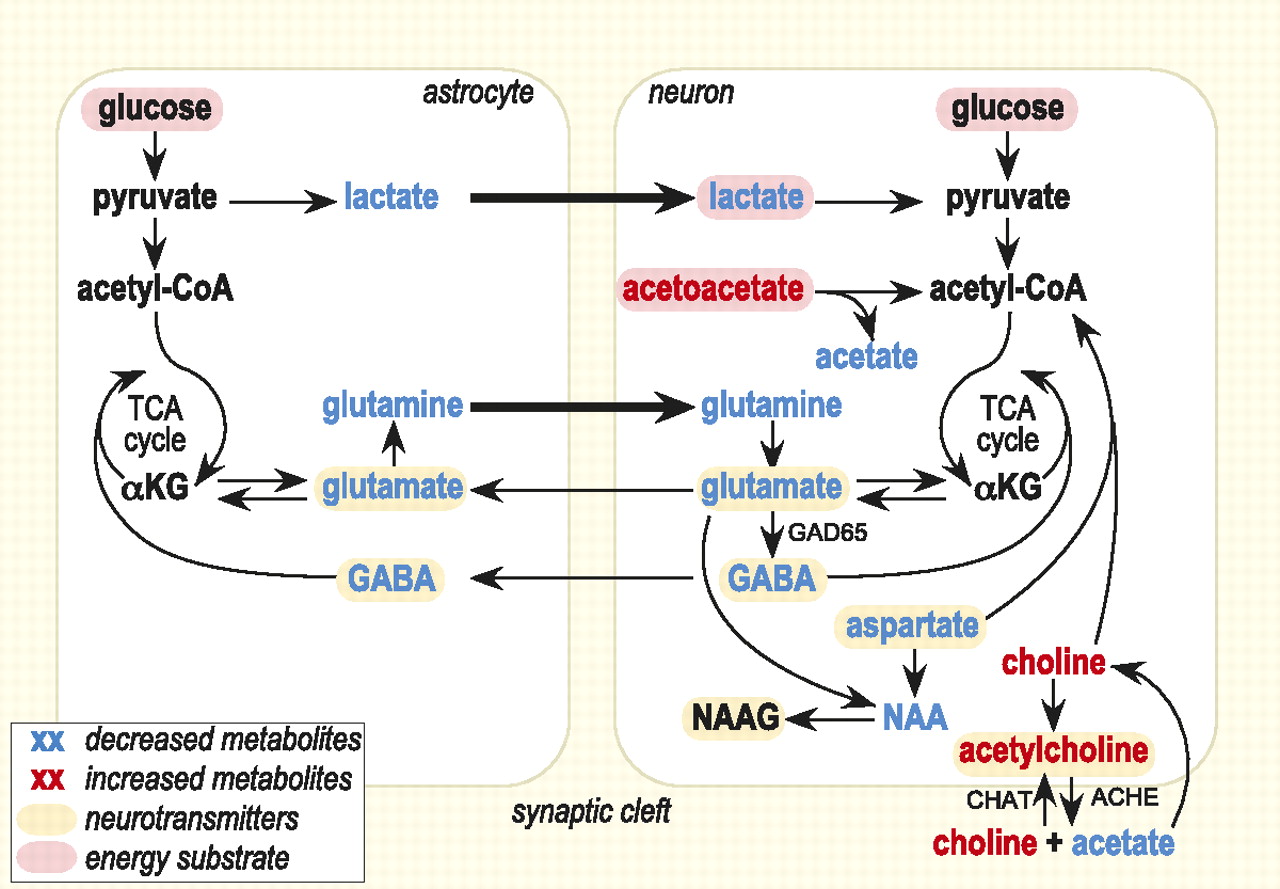
Schematic metabolic map of Fmr1-deficiency in cortex and cerebellum. Astrocytes and neurons cooperate metabolically for neuronal energy fueling and biosynthesis of neurotransmitters, and this cooperation seems compromised in the Fmr1-null brain. Glucose, lactate, and acetoacetate are neuronal energy substrates (framed in pink) which contribute to replenish acetyl-coA stores to fuel the tricarboxylic acid cycle. Glutamate and GABA can enter the TCA cycle via conversion upstream of or downstream from the intermediate metabolite alpha-ketoglutarate (αKG). Metabolites affected by Fmr1-deficiency are represented in blue if decreased and red if increased. Metabolites acting as neurotransmitters are represented in yellow frames. (NAA) N-acetyl-aspartate, (NAAG) N-acetyl-aspartyl-glutamate, (GAD65) glutamate dehydrogenase, (CHAT) choline O-acetyltransferase, (ACHE) acetylcholinesterase.



